
#RASTASKS
‘There’s a time for everything.’ Somewhere on the map of a life, those words find a way of proving themselves true. Sooner or later, everyone understands them. Which makes it impossible not to respect the people who understand early: those who refuse to rush, who wait for the right moment. On life’s map, you can never know when the road will turn uphill, when your path will part from those you love or when you will meet again. One thing, though, is certain: good work finds its way into the world eventually.
Tuğçe Şenoğul’s Atlas (Ruhun Haritası) is one such record. Long in the making, it arrived in a blaze. An album you can love on first hearing, it draws you further in each time you return, letting it settle and taking it slowly. So I don’t think it’s a coincidence that this interview is appearing months after the album and the much-discussed video for ‘Yağmurlar’. I think that’s Atlas playing its own game.
Tuğçe and I first met when she was in her early twenties and I was in my late twenties. There were years when we never crossed paths, yet somehow it felt as though we were walking together all along. In others, the roads kept bringing us back to each other — thankfully. Whether we were close or far apart, I followed her work with enormous affection. Her voice, which I adore, and her songs have always been part of my life. Meeting to talk about an album that occupies such a particular place in her career felt special.
In three sections — Yerdeniz, Gökdeniz and Atlas — the record tells a story from beginning to end. With its underlying philosophy and collaborations rooted entirely in friendship, it was one of the most significant Turkish albums of 2026.
Its many contributors include Lella Fadda, Tsar B, Mabel Matiz, Sezen Aksu, DJ Artz, Karakter, Mehmet Mutlu, Elif Dikeç, Güneş Özgeç, Seda Erciyes, Ozan Sarohan, Adham Farid and Emre Malikler. Released through The Orchard, the 12-track Atlas (Ruhun Haritası) brings together the previously released EPs Atlas Yerdeniz (Ateş & Toprak) — Earthsea (Fire & Earth) — and Atlas Gökdeniz (Hava & Su) — Skysea (Air & Water). Different feelings become a whole as the record explores what they share and where they touch.
If you’d like a soundtrack to our long conversation about the album, life, getting older and ‘Yağmurlar’, listen to the album here.

In the songs on your earlier albums, there’s a woman who waits, who accepts pain along with love. On this album, I hear a woman choosing herself. Am I reading it through too personal a lens, or is that really there?
Do you like the change?
Very much! But we’ve almost grown up together and travelled similar roads, so I worry that I’m making it too personal…
It’s quite a shock that you really have witnessed everything! But that’s precisely what we musicians most want: for listeners to see themselves in what they hear. Or at least that’s what I want. It’s how I work, too. I like leaving people that space. That’s why I try, as far as possible, not to tell the stories behind the songs: so people can write their own stories into them more freely. Make their own films to go with them.
So it’s lovely that your interpretation reflects your own experience. But I also think something very interesting happens: an invisible space of empathy opens up. A pool of shared feelings. That’s what the album is about. And we meet there, whatever happens. We might not feel it in the same song, but somewhere, in one of them, you will find that feeling, and we meet again. The story becomes complete.
That’s exactly what this record is talking about, so I love that you’ve connected with it in that way, and then wondered whether you’re really talking about yourself. After the loneliness of an album trying to confront its own darkness, this is a transition towards a version of myself that believes feelings find an echo wherever you go in the world. It’s a more populated album. There’s a strength, I think, in that sense of togetherness, of being one. Perhaps I’ve used it as a wind at my back.
How much did the country, the period when you began writing these songs and the pandemic shape the feelings on this album?
I’m not sure we can see the full impact of the pandemic yet. Perhaps in 50 years we’ll say, ‘Those were its effects’, but I don’t think we can see all of them now. Actually, I think being an independent woman artist in Turkey had a greater impact — especially being entirely independent, a woman artist with no support at all. So making this album might have taken just as long even without the pandemic.
The economic difficulties it created may have affected getting the record out. But I’m not someone who needs long stretches of time to write songs. Quite the opposite: I write often, and I write a lot. Making those songs something people can listen to requires much more than time, though, and getting everything in place takes a while. My greatest responsibility is to make an album that feels right to me, to complete its story within myself. Then there are the budgets: a much longer, more painstaking process than it might appear, and one that requires a very clear head. Even then, things don’t always flow.

The woman in the songs
But hasn’t social media made independent artists more visible? Hasn’t it helped them reach more people while making them seem even cooler?
I’m not sure of the answer. Independent or otherwise, every artist still has to contend with the algorithm. We keep encountering that word as though it were some monster in a game that nobody can get past. You really can struggle to appear in front of even your own listeners. Perhaps the big labels have more ways of reaching audiences — you hear about those things. It isn’t easy for an independent artist.
But once that connection with a listener has been made, I believe it’s stronger for independent artists. That’s one of the reasons I chose independence. Being able to keep my own space entirely original and entirely mine mattered enormously to me creatively.
Let me go back to the woman in your songs. Listening to the older ones now, from this stronger place, do you ever feel you were a little unfair to her? Wouldn’t it have been better if she’d suffered less?
No, I don’t. Perhaps I’ve felt that way about relationships. I’m only just learning to set boundaries, and I may have thought that about the times when I couldn’t. I hope I can leave those things behind and accept them, too. But there may be things you can’t accept, and that’s all right as well. When it comes to my songs, though, I’m completely at peace with them, thank goodness. Without those experiences, we wouldn’t be talking about those songs today.
Before making music as a solo artist, you worked in different musical settings, including the duos Seni Görmem İmkansız and Kahinar. How does that work influence the songs you make now?
In terms of how I make and create things, Kahinar and Seni Görmem İmkânsız — everything I’ve been part of, really — have had an enormous influence. Those two stand out because they’re the projects in which I most intensively experienced making music and writing songs.
Kahinar taught me a great deal about arranging, songwriting and creating an atmosphere. Seni Görmem İmkânsız gave me so much in terms of making spaces to play, and finding ways within them to express my own pain, grief and feelings. Some listeners have even described Kahinar’s songs as a preview of my own.
The image you created for the Atlas cover is magnificent. How did the Tuğçe in those photographs manage to be so striking, sexy and intriguing, yet frightening at the same time?
We gave Atlas a character, really. A symbolic one, but she also had to be something of a goddess. That was the idea. I worked with Berk Çakmakçı again on this cover. I love working with him. The world we build together, even the way we rein each other in — every part of it is a pleasure.
Our art director, Altın Tatlı, played a huge part in creating that character. And, of course, my Glam Stars, Tusidi and Anna Tholia, on make-up and nail design. They’re friends who inspire me in daily life, too. This extraordinary world of hair and make-up took shape, with Ali Kaan coming in on hair. We created the character together.
We did the whole shoot on the same set. First came Atlas Yerdeniz, then Atlas Gökdeniz, then Atlas. It was a two-year process, really. It wasn’t easy. You could also call it a lifetime: one encompassing my earlier work, the pandemic and everything that followed. The whole process brought another kind of understanding. From beginning to end, Atlas has been an entirely different process of discovery for me.
We keep talking about the strong woman on Atlas, but if I asked you to name the feelings of the album as a whole…
Being one. Being together. That feeling. Feeling that you aren’t alone. Like everyone else, throughout my life I’ve often thought or felt I was lost, and thought I wasn’t allowed to be. Belonging has always been a question for me. Finding a place, a space, a family.
Feeling that getting lost is part of the journey, that it belongs to the road; realising that you haven’t really lost your way… Understanding that, however alone you are, the loneliness we experience is something we share changed the way I approached everything in life.
That doesn’t mean I’m someone who feels lonely all the time. There are so many people around me who support me. I feel very lucky. There are people I can truly call my chosen family, people with whom I’ve made beautiful things. I’ve felt their support deeply. Even so, there are moments when you feel alone: sometimes it’s an illusion, sometimes it’s real.
And I think you should experience it. If nothing else, to empathise with people in the world who really are alone. Of course, not every artist lives and works this way. But because I see art in general, and singing and songwriting in particular, as a kind of channelling, I experience it by letting it pass through me. I live the feeling, even when it isn’t mine.
So we can’t say that all your songs come from your own experiences and feelings?
Not every song is my story. There are songs on my albums that sound entirely mine but tell stories I’ve never lived. Songs inspired by things I’ve heard. If you can find that empathy, you don’t need to have lived the experience yourself. You find a way of living it.
From Sezen Aksu to Mabel Matiz
Your cover of Sezen Aksu’s ‘Bu Gece’ (Tonight) is extraordinary, by the way. Listening, I felt as though you’d been the first person to sing it. Then, just after I’d listened to the album, the latest series of Zeytin Ağacı came out. Hearing your version in exactly the right scene felt like a door opening into another dimension…
It was actually our wonderful director Neslihan Yeşilyurt who asked me to cover it for the series she was making at the time, Bambaşka Biri. A piano-and-vocal version came to mind straight away. We made it with Zafer Sernikli. When I do a cover, I like to create my own version.
I love the original ‘Bu Gece’, too, but behind it there’s a pain a little like a paper cut. We brought that pain out by adding piano, by adding silence. Mabel [Matiz] persuaded me to put it on the album.
For me, ‘Sensin Bunlara Sebep’ (You’re the Reason for All This), which Mabel Matiz wrote, still occupies a place of its own…
Yes. When Mabel wrote it, he said, ‘You have to sing this.’ And it really is a different kind of song. Very special. Singing it on stage with Mabel was beautiful, too.
Tuğçe, we said we’d grown up together. Although I’m quite a bit older, we were both in our twenties when we met: I was at the end of mine and you were at the beginning. Since we’ve been talking about the changing woman in your albums, I want to ask this, too. What has being in your forties done to you? How has it changed you?
Forty turns out to be extraordinary. Really strange. Very different. The stretch between 39 and 40 was difficult for me, because I’d never had any real sense of age. Actually, I still don’t. But something shifted then. What exactly is happening now? What are the people around me talking about? What is life talking about? I started asking those questions, in negative ways and positive ones.
Your forties, it turns out, are when you become conscious of what you’re living through. Once time has passed, I think you realise how precious that time was. I feel that about my thirties, too. Everything happened as it needed to. For my particular life, those were the things that had to happen then. I understand all of that. But with the mind I have now, I’d have lived with a little more awareness. I’d have seen it a little more through that lens.
The same will be true in my fifties. It always will. Someone in their sixties says the same thing about their fifties. If you really listen, you realise everyone is saying it. I wouldn’t even want to go back to before my thirties. I think you only really begin certain things after your Saturn return.
I’d spend the years before my Saturn return exactly as I did — perhaps partying even harder. Before your Saturn return, I think you should live your life. This capitalist system imposes an obligation to build a career at 19. Don’t be ridiculous — you’re a child! You should be having fun, going out, going on holiday with your girlfriends. You know? If you haven’t got the money, earn it. Make it possible, create those opportunities and go off exploring.
That should be your party time, the period when you dance more than at any other point in your life. Then your Saturn return says, ‘Come here, you. Come here, darling.’ Time to build something. Of course you’ll be building things before that, too. It isn’t only about parties. You’ll look after yourself and your body. But predominantly, I think that’s a time for living, to the fullest, without focusing quite so much on responsibility. Saturn teaches you how to take responsibility afterwards anyway.
It’s like an endless cycle. I’m trying to enjoy the present. In fact, I’m probably partying more than I ever have. At precisely this age, we’ve built quite a party community. And I really am spending my time dancing. I’m trying to dance as much as possible.
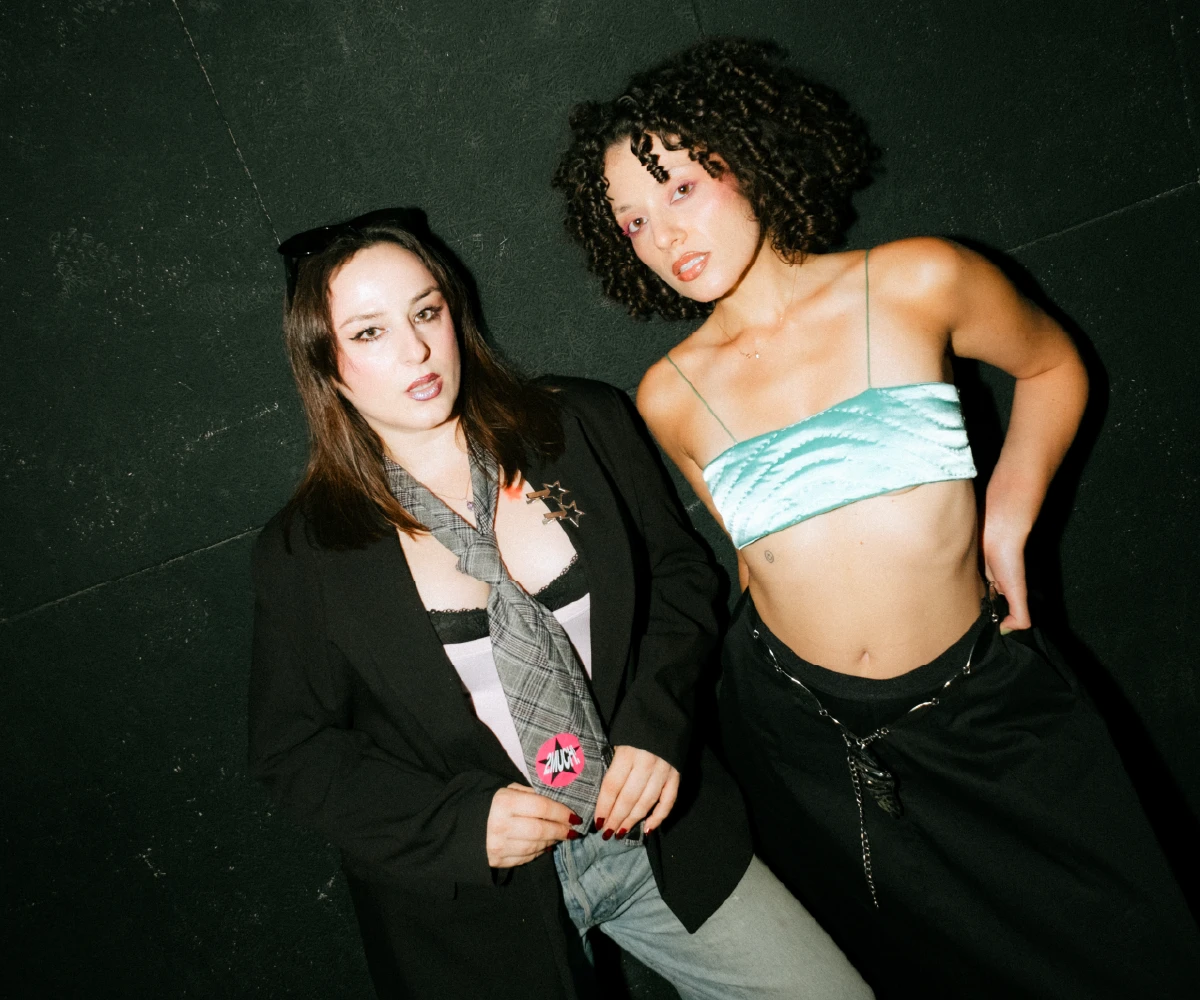
That was exactly what I was going to ask! 2Much!, which you started with Seda Erciyes, is such a brilliant dance project. Tell me about it.
I’m certain 2Much! has changed every corner of my life profoundly: my relationships, how I connect with people, how I live, how I experience love, how I see myself, how I look in the mirror. Everything. It’s changed my musical perception, too. I’m sure of that.
I’ve been DJing for about 10 years. I’ve always loved listening to music, listened to a lot of it, and loved playing it, too. And, being an independent artist — well, you know — I needed another source of income…
Since Seda and I started doing this together, DJing has become so much more enjoyable. I’ve found a friend who shares my taste, who wants to hear the same things when we go out to a party. Thank goodness. It makes me so happy! I can suddenly put on Mezdeke in the middle of a set, completely at ease, knowing that the person beside me might say, ‘Bravo! Perfect choice.’ There’s that trust. She can play whatever she wants, too. I know it’ll be exactly the right song.
We’ve made that space for each other. We can play anything. Dress however we like. Wear any kind of make-up. Be any kind of person, really.
From what I’ve seen, the same goes for the people who come to your sets…
It grew by itself, actually. It wasn’t something we planned at the beginning. We were just playing. But people who came started bringing their friends the next time. Eventually it became a community.
People who come need to feel safe and at ease. We need to be able to dance freely. That matters. Within those boundaries, we’re trying to make it a place where there really is room for all of us. We’re making space for ourselves, too. There’s a crowd here trying to move beyond their own limits, to find a space in which they can be visible. 2Much! took shape when we recognised that. It’s still growing. And it really is the most joyful part of my life.
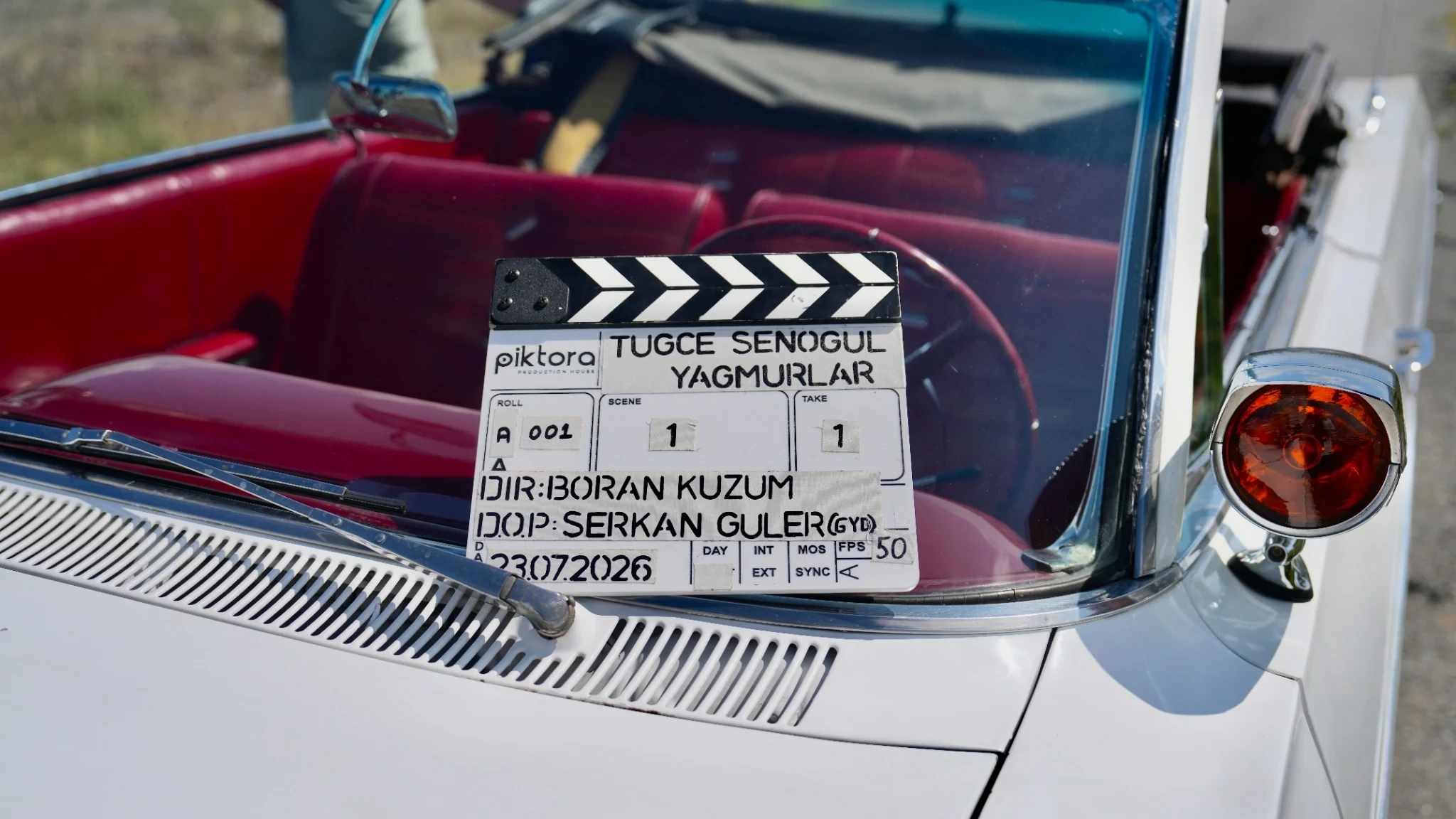
Back to the album. I’m sure readers and listeners are curious about this: your close friend Boran Kuzum directed its first video. Did you ask him? Did you choose the song?
Boran and I have known each other for many years, but we’ve been closer friends for the past three or four. What I love most is making things with people I’m already close to, and this felt like the pinnacle of that. The idea for the video came from him. He’ll explain it better. But when he first told me his idea, I was so moved that my eyes filled with tears. I’ll say that much.
The whole process was inspiring and a pleasure. I don’t tell anyone the stories behind my songs. But Boran had understood the song from such an extraordinary angle — he’d understood the entire story the album tells from this incredible place, and written a story out of his empathy with it. It was fascinating.
He portrays a very strong woman: someone who completes her story by carrying on through every moment in life’s cycle, choosing herself, moving towards a stronger, better version of herself. When I watched it, I said, ‘What have you done here?’

Will you make videos for other songs together?
I can’t answer that. There are always dreams; we have beautiful dreams in general. I don’t know where Boran will fit into them, but I’m certain he’ll be right at the heart of them, whatever happens. His presence in the things I do will definitely continue. I just don’t yet know what form it will take.
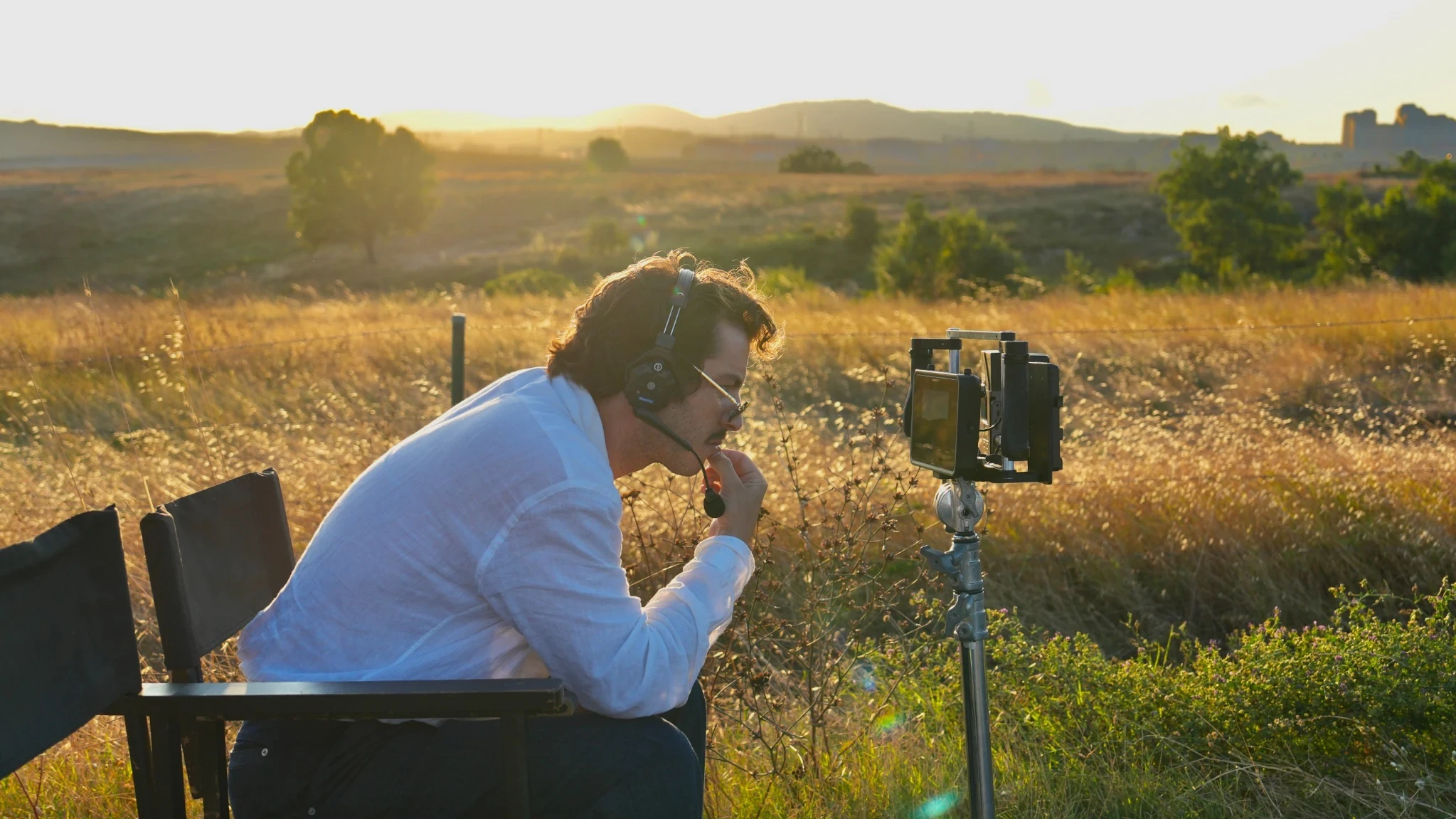
Over to Boran Kuzum
I’ll start with the video’s most striking scene: the one in which you’re ‘burning’. Tuğçe’s look is so powerful there, and so is yours. It feels as though there’s more than revenge in that scene: a woman asserting her own power by saying, ‘I’m not going to save you any more.’ Were you thinking of a separation, a reckoning, or something I haven’t seen?
As I’ve got to know Tuğçe and her music over the years, every song and every story has shown me a woman emerging stronger from what she’s lived through. She’s an artist who manages to tell her stories through human feeling, never within a didactic framework.
When I listened to ‘Yağmurlar’, the story that came into my mind was of a woman who manages to leave behind the weight and exhaustion of the past. I wanted to use the four elements in her album’s manifesto as metaphors within the story. The rain — water — that gives the song its name represents cleansing; earth represents roots; air and wind, going with the flow; and fire, letting go of burdens.
Why did you choose this song in particular? And before any of that, where did the idea of making a music video come from?
Tuğçe sent me a demo before the song was released, and after a few listens this story began to take shape in my head. Then, without telling her, I kept thinking about it and trying to finish the story. Once I’d worked it out, I told her. The story made her feel good, too, and we started working on the technical side straight away.
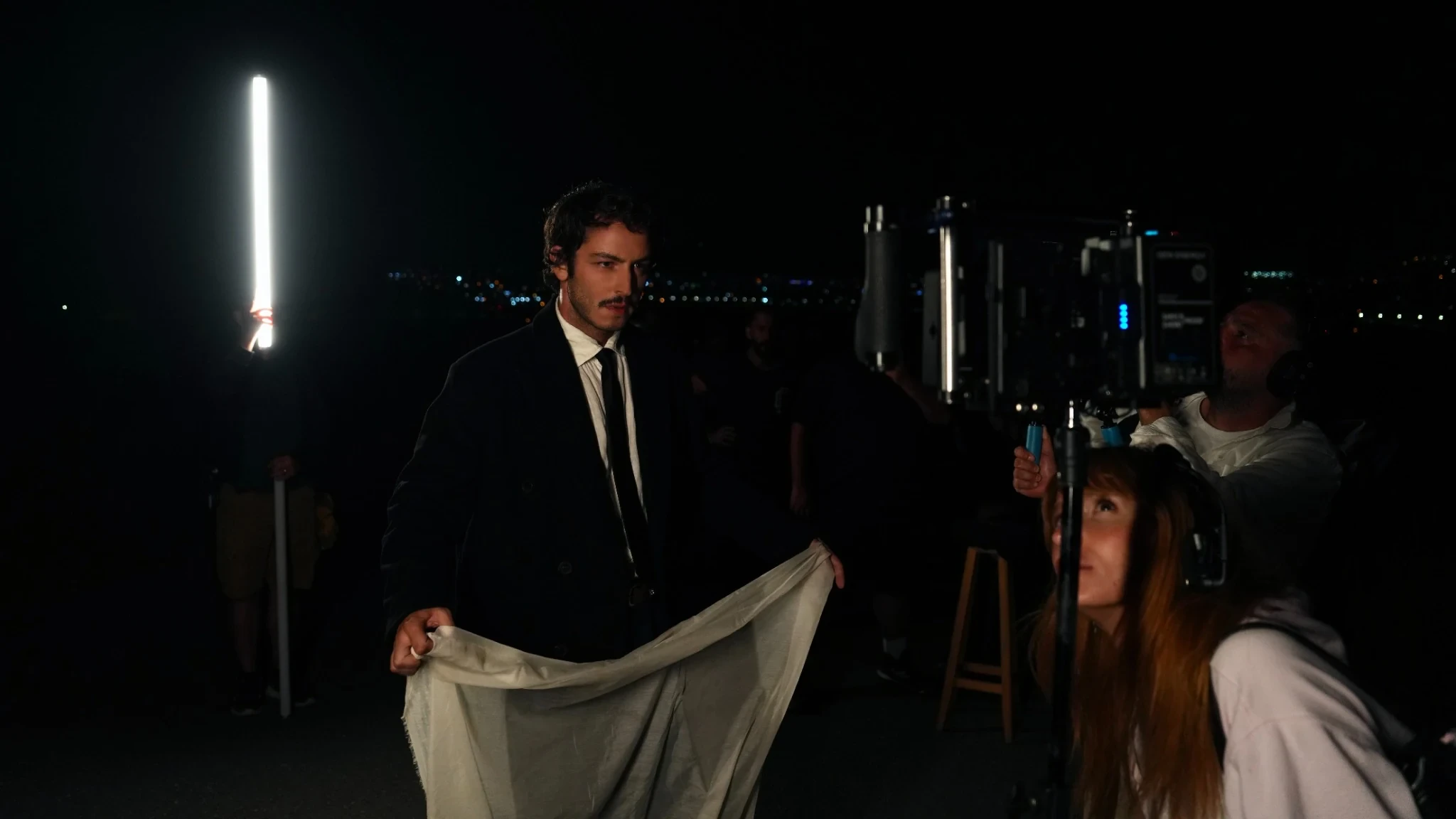
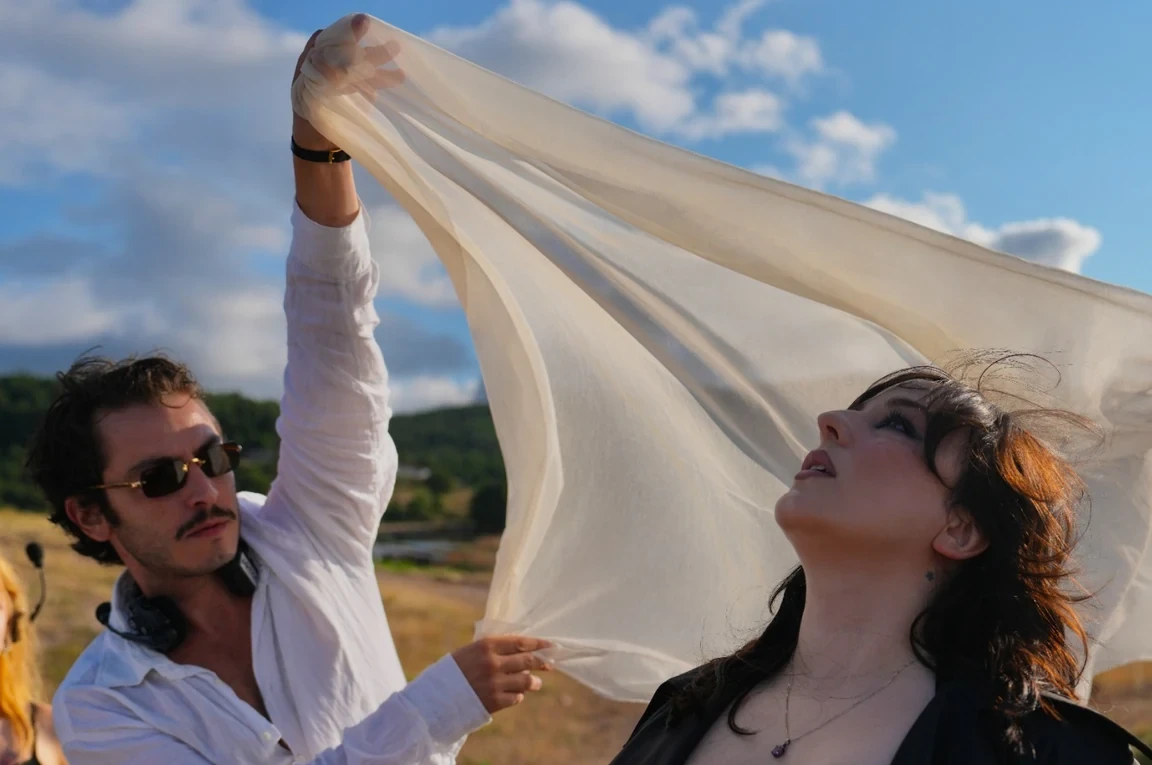
I already love Magritte, and the moment I saw the cloth over the couple’s faces, I was transported to that painting and felt the same thing. How does it make you feel that a painting made in 1928 still carries the same meaning when it comes to relationships? Why did you choose it as such a clear reference? What was it in the song that made you think of it?
In this painting, Magritte emphasises that even the people closest to us retain a mystery and a distance we can never entirely resolve. The white cloth covering their faces symbolises the physical and emotional barrier between two people who love each other. Despite the passion of the kiss, the fabric suggests that a complete union, or truly ‘seeing’ the other person, is impossible. Strangely, a painting made so many years ago represents the sociology of relationships today all the more precisely.
You’ve previously spoken about being deeply influenced by Agnès Varda’s Cléo and by Xavier Dolan. Where do those influences surface in this video?
There must be inspiration somewhere in there from the things I’ve watched or worked on over the years. But for this story, it was Tuğçe herself, her music, that inspired me.
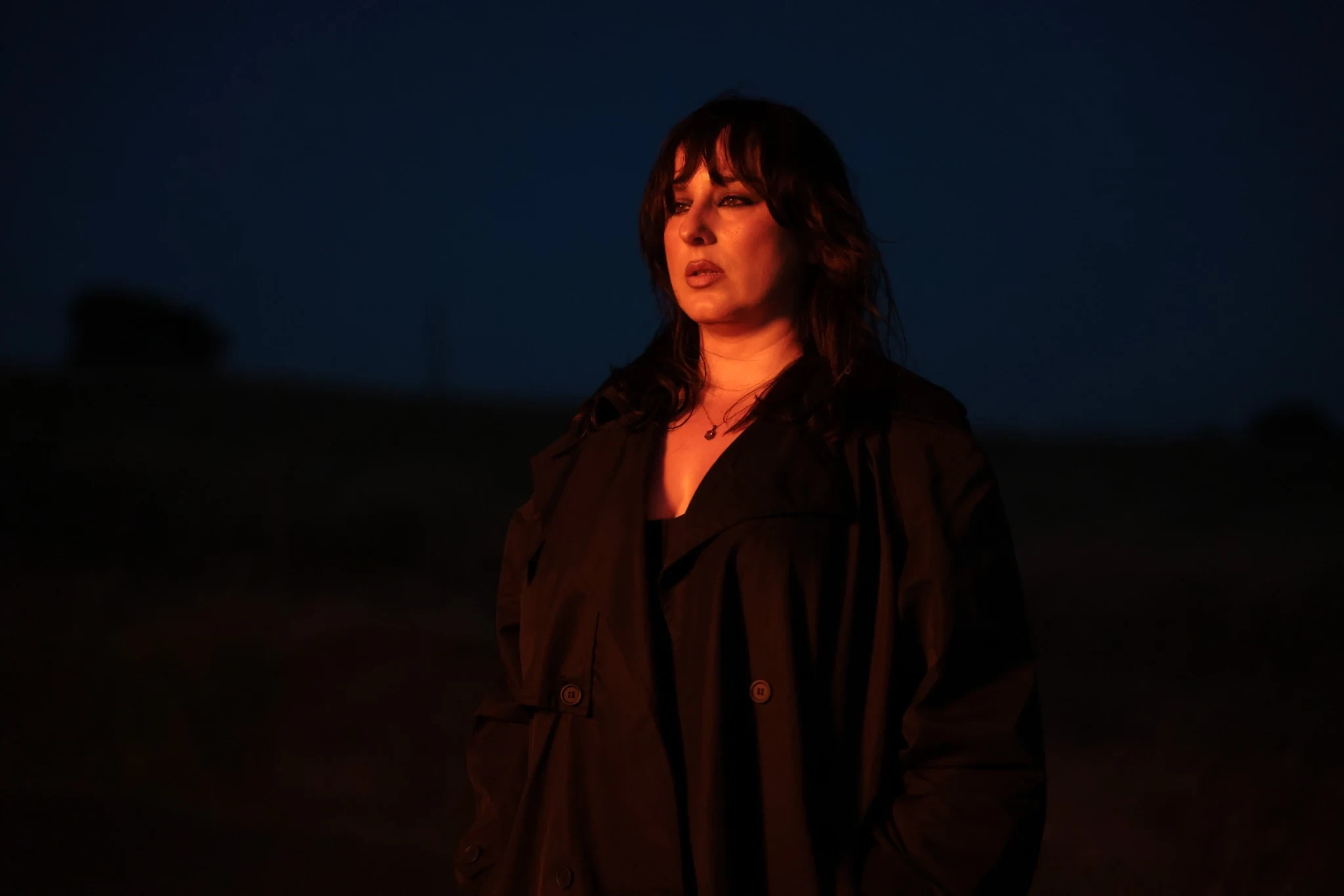

When we talk, Tuğçe always says she doesn’t like explaining songs, that she wants to leave them to the listener. While preparing this video, did you discuss the feelings she had when she wrote the song, or are we watching only its reflection in you?
I have enormous respect for a creator’s right to keep their story private, so I never asked. I just wanted to put the lyrics of her older songs in the suitcase. I only asked her this funny question: ‘If there are songs you’ve written about the same person before, let’s prioritise those.’ :)

There was an actor inside Tuğçe all along! Did you enjoy bringing that out? Are you thinking of making more videos together?
Isn’t Tuğçe incredible?! But I wasn’t surprised. An artist who conveys feeling so well through music was hardly going to struggle to convey it in another way. I have dreams. I hope we’ll make many more things together.
Did you enjoy being behind the camera? Will we see you directing and producing other projects?
Honestly, I hadn’t planned to do anything like this. So I’m going with the flow, and I’ll keep following inspiration. If something feels right, why not?
One last question: what’s your favourite Tuğçe song so far?
There are so many. But the ones I have on repeat right now are ‘Yağmurlar’, ‘Atlas’, ‘Cennet’ (Heaven), ‘Bıraktığın İzler’ (The Traces You Left) and ‘O An’ (That Moment).
Paylaş