


Written podcast — episode five
Guest: Merve Dizdar
The question: can we be happy again?
Were childhood sorrows and joys bigger? Did we feel them more deeply? Did every emotion seem endless because life had not yet taught us that this, too, would pass? The salt of the sea, your mother’s voice, a teacher’s praise, your grandmother’s soup, the thrill of swinging upwards, the imprint of your father’s fingers on your cheek: all seemed as though they would stay for ever.
Then you grow up and accept that you, like your feelings, are temporary. You hold more tightly to what can endure, even as it changes. You become more attached to things that remind you of childhood, that draw out quiet emotions still living somewhere inside you. Theatre is one of them. On a stage, through experiences we have never had, we can rediscover everything from empathy to laughter, our addictions and ugliness, a child’s delight and a powerful rebellion. But that encounter, like people and feelings, exists only for the length of a scene. The play may return every night. No scene ever truly repeats itself.
Leaving People, Places and Things, I felt as if my face had been washed in Merve Dizdar’s radiance and tears. I saw one of the early performances. My palms were red from applauding. Watching an actor you love at the centre of a stage is something else. Yet afterwards I thought: even in a fleeting appearance, in any production, not necessarily theatre, Dizdar leaves something of herself and her acting behind. She did not win all those awards — including best actress at Cannes — for nothing.
Last week, at Pax, one of Kadıköy’s small theatres, I saw Yetim, or Orphan. Dizdar was not on stage, but her presence in the production was clear. It follows a little girl whose parents separate, who is sent first to boarding school and then to her paternal grandmother. I watched with a lump in my throat.
Afterwards, I wondered: can someone be happy after a childhood like that? Could we, after what we have lived through in this country, be happy again one day? Could we love again after our hearts have broken into dozens of pieces? Is happiness possible again? I could think of nobody better to ask than Dizdar, who seems to answer it with the light in her eyes, who goes on making things in every setting, despite everything.
Shall we start with Yetim, which you supervised? It moved me enormously. The text is extraordinary.
Merve Dizdar: It’s a one-woman play. Burcu Arslan, who performs it, has been my friend since 2008. Its director, Ediz Akşehir, has been a friend for a long time too. Burcu reads a great many novels and short stories. When she read this novel by Hatice Meryem, she shared it with me and a few friends we love. It really is an extraordinary story. It touches everyone somewhere.
She told us she wanted to make a play, and we all got involved. Burcu and I adapted the novel; Ediz made further revisions and gave it its final form. Then we began rehearsing. We spoke to our dear Bora Akın at Pax, who let us rehearse there. We performed it there and still do, often. Ayşegül Karacan, whom I love very much, made our poster. I thought: look how many friends we have. They supported us throughout.
That is one of the most precious things for us, because we couldn’t have done any of it on a big budget. And it became this lovely piece, beautifully performed, that takes you somewhere very different. A collective work. All our friends, all the people we love, and all very good at what they do. We’re lucky in that respect. Our endless thanks to them all, especially Hatice Meryem.

Collective work is always better. Watching it, I thought: however painful childhood is, perhaps the happiness is purer. These days our happiness feels stained. Perhaps that is adulthood. Am I being too dramatic?
No, I don’t think you are. When I was 35, during a period when I was very unhappy and probably a little depressed, I went to stay with my parents in İzmir. I was thinking and talking about everything a great deal, and going to therapy. When I described some childhood moments, my therapist said: ‘Merve, these are significant traumas.’ Yet with a child’s mind, I’d actually found ways to have fun in those situations.
Anyway, I was in İzmir, in a mood with everybody because of how I was feeling. We began looking at childhood photographs. I started crying. I looked so happy in them. We always had difficulties; my father always had to work very hard. But even then, I was doing things: playing games, jumping about, climbing all over him, playing with my sister.
I know how much they struggled, how hard it was financially to bring us up. But I had actually been very happy. The photographs showed me that, and remembering those moments felt wonderful. Sometimes you have to look at apparently negative situations from the other direction. I’d always done that, but sometimes I forget. That was exactly what happened then.
Are you still in therapy?
I went for a year and it helped enormously, but I don’t want to keep excavating things I can’t change. I also recover quickly. I have a lot of energy and bounce back fast. I adapt to what happens, good or bad. Constantly blaming people and complaining are among the things I dislike most. Blaming somebody is the easiest thing in the world. I could transfer responsibility to you immediately. It wouldn’t take five minutes. I could put it all on you very easily. I see plenty of people doing that, but it’s not what I choose. After 36, when I changed, everything changed.
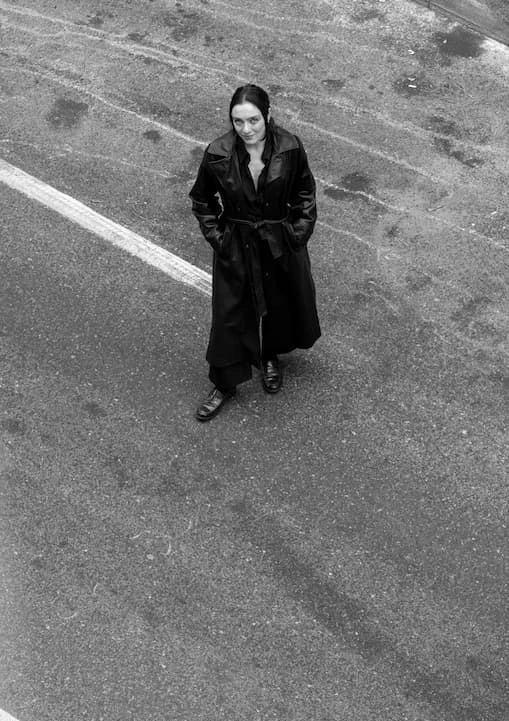
‘Every stage of growing up brings pain’
How did you change?
Some of the therapy worked, for a start. Really, everything is there in plain sight. There’s a line in People, Places and Things, in therapy: ‘Denial is what’s killing you. If you’re honest with yourself, you can get out of here.’ I’m very honest with myself. When I go to therapy, I don’t try to falsely exonerate myself or immediately cover things up. After therapy too… That’s my way. But every stage of growing up brings pain, and I think I quite clearly became an adult around 35 or 36.
Thirty-five is almost a second adolescence anyway. What do you think about trying to halt the physical changes that come with age?
For myself, I’m against procedures such as smoothing the skin with Botox, with a toxin. But skincare treatments might be fine. At a certain point, the vitamins you take may not be doing anything, and perhaps some underlying support is needed. I also think joy matters enormously. It keeps you young. Anger and irritation — emotions like that — don’t do your body or your health any good, I think.
I agree. I think that is a major reason for the country’s current condition too.
I really think it causes illness at some level. I’m not saying we should strive to be happy, but I think being constantly angry, constantly in that state, makes the body ill.
We all had a difficult year. During that period of feeling unable to do anything, I started running, because I couldn’t solve anything and so many things kept happening, one after another. Running has a scientifically proven effect. It really did something to a part of my brain — ‘zzz’. One of our directors, Tarık Yağmur, was a therapist. I asked him: ‘Hocam (a respectful form of address for a teacher or mentor), I feel like this — is it normal?’ He said: ‘Running and brisk walking are therapy.’ Things your body releases change.
When I run, either I think of nothing or I think of lots of things and leave them there. Now I run when I’m sad, when I’m fed up, when I’m unhappy. Somehow, I use my body to fix what I haven’t been able to fix psychologically. There’s an outside-in approach to acting: sometimes you find the emotion through movement. That’s how I sometimes try to create my own wellbeing, to feel better from the outside in. Effort, always effort. To live.
And that effort is what matters…
Yes. Unfortunately, I’m generally a positive person anyway. What can I do? I wake up happy, with energy. Every day is a new day. And I’m 39 now. I’ve realised what matters is the health of those close to me: my husband, my friends, the people I love. I don’t want to sound like an auntie, but health has gone right to the top. If my loved ones are healthy, that’s what matters. I’m well, but after some people around me had health problems, I began to believe that.
‘Being joyful and being happy are not the same’
Does your happiness with your husband affect your energy too?
He’s one of the most wonderful people I’ve ever met. I learn so much from Cihan. He is extremely positive and looks for solutions. For a start, he isn’t an angry person. He doesn’t sulk. Sulking is one of the things I can’t stand. All sorts of things happen to us, but he isn’t a joyless person. Being joyful and being happy aren’t the same thing. You know the saying, Allah iyi insanla karşılaştırsın (may God bring good people into your life)? It’s beautiful.
Last year a friend said: ‘May you find people who know how to love and be loved.’ It really is the loveliest wish. Knowing how to be loved matters too.
Because if someone thinks they don’t deserve it, if they feel worthless, you can give them as much as you like and it won’t work.
You said joy and happiness are different. That was one of my notes. How did you become aware of the difference between feeling good and being happy?
I’m a Cancer, and I love melancholy. I might be someone who feeds on intense emotion too. But thinking there’s no way out makes me terribly sad. I can’t bear that way of thinking. So I might be unhappy for two or three days. But carrying it into a fourth day, a fifth, a week, two weeks — that’s also a matter of habit. Everything is a little like sport.
That’s why, at 39, I don’t have that many friends around me any more. I’m a little selective. I could drop everything and just sit on top of all this unhappiness. That’s the easiest thing. Getting out of it is hard. Because we always avoid what’s difficult, I try to move towards it.
And, of course, I do theatre. At the end of the day, there might be no television, no film, nothing else in my life. But the one thing that has been there for years is theatre. I always get on that stage. Keep making things even on your worst day: that’s my principle. Even if nobody gave me a role, I’d go out and act in the street. I’d still act, still practise my profession. I’d do improvised theatre in the street. It saves me a little.
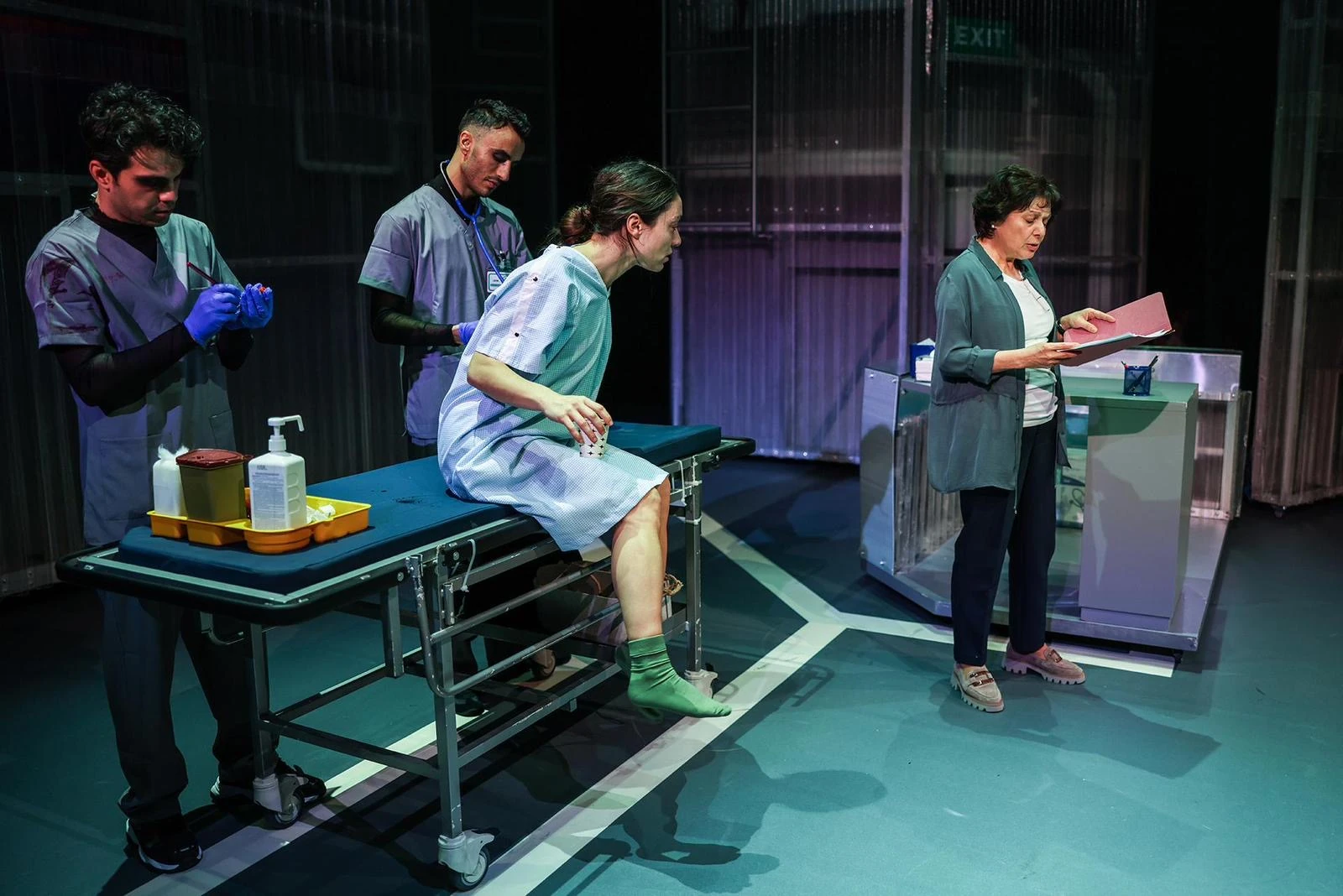
‘Acting is a very difficult profession’
I also believe making things is a form of resistance. When I interviewed you for a magazine before, you said your roles affected you deeply. You keep playing emotionally exhausting parts. How do you preserve your joy?
Acting is a very difficult profession anyway. Some people go to set, do their job and finish. I can’t. I like to live these things. People, Places and Things is a very difficult play, physically and mentally. But that’s also one of theatre’s loveliest aspects: after a while, the body learns. It’s in my physical memory now. I’m not devastated by every performance, because my body knows. The body is extraordinarily intelligent. I immediately enter that state of mind; I don’t think about sad things to get there. It has become technical, because I’ve done it for years.
But one day, when I was going to film a very difficult new scene in Masumlar Apartmanı, I woke up and found myself sitting with the curtains shut. I open them every day; it’s the first thing I do. I’d drifted off, thinking about the scene. It was new. I had to learn the emotion. I couldn’t just have my coffee and jump straight into it.
Theatre is exactly like sport. You need fitness, a body in excellent condition, a voice, technique coming together with emotion. Then it ends. With Masumlar Apartmanı too, once the scene was filmed, it was over. By evening, somehow you’d come back to yourself. But going into a new scene takes extra thought.
‘So many women have suffered at the hands of a Kenan Baran’
You cried plenty in Kral Kaybederse, and so did we. It was such a good drama. Just when I thought your character, Fadi, would end up broken, she became so strong. Knowing it was a true story made it more moving. Good for her.
It was an extraordinary series. The woman is remarkable: she really goes from the bottom to the top. She’s extremely hardworking and intelligent, but you can remain under someone’s manipulation for years. It is that powerful. It’s terribly sad when someone’s feelings, particularly women’s feelings, are exploited.
How much of that do you think is love?
Most of it isn’t love, I think. How much? I don’t know. For Fadi, I think it also comes from her family. She gets herself out of everything, but she can’t escape something like family. And she falls for this man. There may be love, but it isn’t the main thing.
So many people said to me: ‘Do you know, we’ve suffered at the hands of our own Kenan Barans.’ I swear, this story is everywhere. During the second series, I heard unbelievable things from viewers. I don’t know how much of it is love. I’m not sure it really is love.

The exhaustion of social media
How does it feel when women tell you that?
After a point, I want to say that they need to begin getting back on their feet, drawing on my own life too. But everyone has to go through it themselves. I allowed myself a certain amount, then woke up. I want them to wake up, but I can’t tell them how. If it were me, I’d say leave immediately, but it doesn’t work like that. You do need awareness.
It might sound easy to talk from the outside, but it isn’t, because I’ve lived it too. Like every woman — I don’t know whether there’s a woman who hasn’t. I had relationships like that even when I was warned. Of course you want to give the woman in front of you a nudge. I wanted to nudge Fadi all through the series, but I knew that place so well that I couldn’t. Sometimes you have to live through it to wake up somewhere along the way. I wake up in three years, you in five, someone else in 10. Let’s say everyone has their own story at some point.
On top of the stories we see in dramas, social media is full of relationship warnings and labels such as narcissistic and avoidant. Then you meet someone new and immediately start looking for red flags: are they a narcissist? Are they lying?
Yes, prejudice when you meet someone new. Prejudice is extraordinary. I do it too, a lot. Then I tell myself: ‘You’ve judged again,’ and try to calm it down. Staying alert matters. I want to call this ‘the exhaustion of social media’. It’s about spending too much time there: consumption, mahalle baskısı (the pressure to conform exerted by one’s social surroundings), psychological pressure, everything. There are so many women, so many men there; you can message them immediately.
We call it the age of science and technology, but unfortunately I can’t keep it up. I don’t have Twitter. I have Facebook, but not really: I haven’t opened it for years. Only Instagram. The other day, a friend had had a baby, another had been ill. ‘Didn’t you see it on Instagram?’ they asked. I don’t see things. I post a story and leave. I don’t look, because once you fall in, you can’t get out, and I really don’t like that. I don’t run my work through it either; I can’t.
It feels as though we’re losing the act of living. It’s about staying alive to things. I still buy a newspaper. I have a diary and write notes in it. I can’t read a book on a tablet. I still read books. I have those habits. I genuinely believe some of what people used to say. I carry on with things our elders, grandmothers and mothers told us. But it’s a mad age. Can I keep up? I’m not trying to, actually. I don’t know. In that respect, I think it’s a difficult time.
‘I still wish I’d played parts of About Dry Grasses differently’
What moment on stage makes you happiest?
Every moment. Every moment we’re acting. I’ve been doing theatre since around 2008–2010. I came to television and cinema quite late, so theatre feels like something you must always do. I never thought of taking a long break. I did Yutmak, then Alice, now People, Places and Things. There might be no television or cinema, but I can’t imagine a period without theatre.
Each play, each evening, is the same and different. You experience a thousand emotions. That’s why I’ll do theatre until I die. It’s what makes me happiest. And it’s dangerous, difficult. A theatre audience is the sweetest thing in the world. Very sweet, but it may not forgive you, or it may take you to its heart. If it sees you getting too pleased with yourself when it laughs, it can take everything back. It’s hard, because it’s live performance. You and the audience, interacting, making the journey together.
As a spectator, I find that possibility of starting from scratch at every performance fascinating.
Yes. That’s the beauty of theatre. You can say: ‘I overdid it there; I’ll fix it in the next performance.’ Of course, living that emotion in the moment is difficult. In cinema, though, you’ve done it and it’s finished. That has its own difficulty.
Which teaches you more?
Theatre is hard too. Their difficulties are different. I think about it all the time, but for some reason I feel more comfortable in cinema, because I can do another take, and another, and another. Yet when we were filming with Nuri Bilge Ceylan, I might have played every possible alternative and finished, then still gone to bed thinking: ‘I wish I’d played it like that.’
In theatre, you have that chance. Both have risks. Ten years from now I might watch About Dry Grasses and ask: ‘Why did you play it that way?’ There are still moments I lie in bed wishing I’d done differently. But theatre’s difficulty is everything. Everything. Your body has to be in excellent shape. Your fitness has to be excellent. The audience is right there and will see it all.
‘I didn’t earn money until I was 35’
Is there a point at which you would say: ‘If I couldn’t earn anything from this work I love so much, I’d stop making it’?
No. For years, I didn’t earn anything. I’ve only just started. I became a little better known after the second series of Masumlar Apartmanı. Then I started earning. Until that programme, I lived in a studio flat for eight years, up to the age of 35. I first went abroad at 35, because I had no money. For a long time, none at all.
Despite all those difficulties, despite not having it, I kept making things and trying. If it happened again now, I’d do the same. It wasn’t three or four years without money; it was 10, and before that things were much the same. In general, money isn’t the issue in my life.
But what happened? I couldn’t have a child with so little money, so I didn’t. I didn’t marry; I married very late. I worked so hard just to stay afloat. That’s why I want to help all students: I know what striving means. But I never thought of stopping. I’m not just saying that. I went to every audition. I got most of the parts I auditioned for; there are only a few I didn’t.
At the end of the day, you have to get that role. There might be a thousand reasons, but ultimately you have to make it through the selection, whether it’s theatre, film or television. It’s the same in sport. You have to score the point, score the goal. And that takes a great deal of work.
‘Be upset for three days then get moving on the fourth’
That happens in every sector.
Every sector. So, shall we sulk and quit? You really have to work hard. That’s my way. Perhaps some people get here without working. What a lovely life. I wish we could get somewhere without so much struggle. But I think an organism needs to be challenged a little to stay alive, to experience some difficulties and try to remain alive. My life has always involved effort, and honestly, I don’t regret it at all.
If anything happened to me today, I’d work again. As long as I wasn’t too old or too weak, I think I’d keep going. I don’t know. I’m not very frightened.
But there is injustice in every sector too. That is undeniable.
Of course there is. Of course people are treated unfairly. The question is how you respond. Giving up is easiest. Be upset for three days and get moving on the fourth. That’s how an organism works, whether you accept it or not. Movement.
‘We have to find a way to be happy’
Do you ever think of working behind the camera?
A lot, but I can’t quite work it out. I think about it often and would love to. Perhaps a play. I’ve started with Yetim. Afterwards, maybe I could direct one, help with short films. I can begin gradually like that.
I can’t teach something, because I think very quickly and might want the other person to do it exactly as I want. I find that dangerous. So I think teaching is difficult for me. I have a very good eye. I can look at things from outside.
What are your work plans for this year?
I have my play. There might be two independent films; they aren’t confirmed yet, but there is a possibility. There’s a short film we’ve shot and finished. I plan to make a film in 2026, or towards 2027.
So do we end by saying: ‘We can be happy again’? Happiness as a way of looking at things…
Happiness — I don’t know. We don’t have to be happy. But I’ve always kept a positive outlook, even when I had the least money, in my worst periods. Once my mother said: ‘I don’t think this girl’s going to manage it.’ But do you know what saves you? Not caring. Yes, that’s what she thinks. You can say: ‘So what?’
For years, I sold chocolates by the entrances to metro stations, standing completely still. Afterwards my father said: ‘Oh, you’re going to stay here. I understand.’ That kind of effort.
You sold chocolates?
Yes, with my face painted. The first time, I felt as though I was having a heart attack. It was so hard. I stood with my eyes shut. My father kept insisting I return to İzmir, because they couldn’t support me in Istanbul. It was the first time in my life I’d stood up to him.
Then, standing there selling chocolates, I began opening my eyes. I was like one of those living statues. I have photographs. I started doing things: someone would come and look, have a photograph taken, and I’d stick my tongue out, then turn back. It became a game. Suddenly I’d wink.
One day my parents came to see me, their eyes full of tears. They saw me. But it wasn’t pity. It was proof of how much I wanted to do this job. A perfect scene. There I was on Bağdat Avenue with the chocolates. I wasn’t paid much, but I was very happy.
Before that, I’d gone to İzmit and auditioned for the city theatre. I didn’t get in. I worked as a waitress there and taught drama, edging my way towards Istanbul. Then came my chocolate-girl adventure. I’ve made an enormous effort for my profession. If it happened again today, I’d do it again. I’m not frightened of that, because I worked so hard. It is impossible for me to forget the effort and the struggle.
I’m certain Dizdar will only sell chocolates again for a role, and that she will do it brilliantly. One day, I hope to see the chocolate girl’s story in a film, giving anyone who is struggling a reason not to give up.
Tickets for People, Places and Things are available here.
Tickets for Yetim are available here.
Paylaş


