


You might like to listen to the songs from the series as you read this long conversation. Listen here.
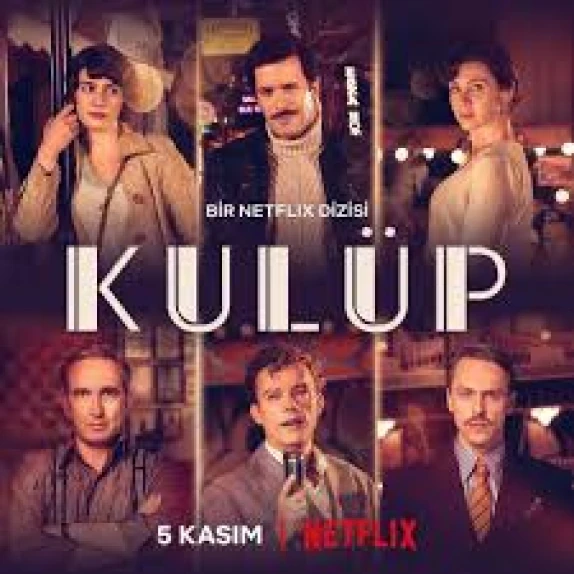
First came Matilda. Then, in Kulüp (The Club), a series with a lasting place in Turkish television history, we grew close to Aysel, known on screen as Raşel: we argued with her, and reckoned with her life. In the third series, Rânâ will grow up alongside Aysel and take up the story. The woman whose life brought us this extraordinary drama is preparing to become its central character. Although, for some of us, its real protagonist is Tasula; for others, Matilda, Beyoğlu, Çelebi, the things it reminds us of, the history we have left unspoken, or the club itself. And there is Rânâ’s own hero: her father, Fıstık İsmet, with his words and his taxi.
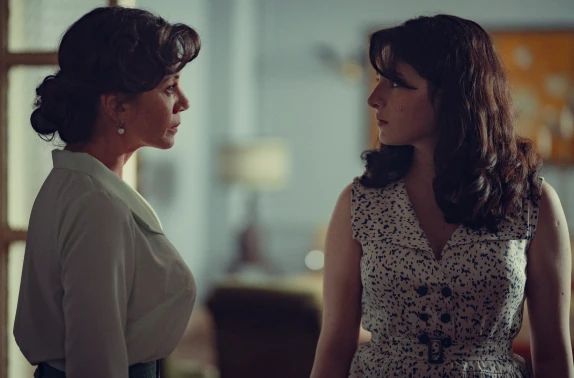
The series follows three women from one family. Behind it, three women stand out among the talented team who believed in the project: Pelin Diştaş on the broadcasting side, producer Ayşe Durmaz and director Zeynep Günay. All were crucial to bringing Denizer’s life to the screen. A women’s story made by women: perhaps that is part of why it feels so true.
Yet this is not a literal account of Denizer’s life, however much the storytelling has persuaded viewers otherwise. The stories draw on her experiences. Many characters were real people, but very different from their screen versions. The little girl with the enormous eyes whom we meet in the second series — Rânâ, apparently recording life like a camera — does, however, share her real-life counterpart’s intelligence and adoration of her father. There has been endless discussion of the woman behind the story and the series’ ‘truths’. The drama has been widely applauded. Denizer herself has remained circumspect in interviews: ser verip sır vermemek (to guard a secret even at the cost of one’s life). Outside her immediate circle, she was known mainly as ranini.tv, to people who followed her online and had pieced together her story over the years. Since the first series, I had been desperate to know more about this woman who seemed capable of changing the world with a glance.
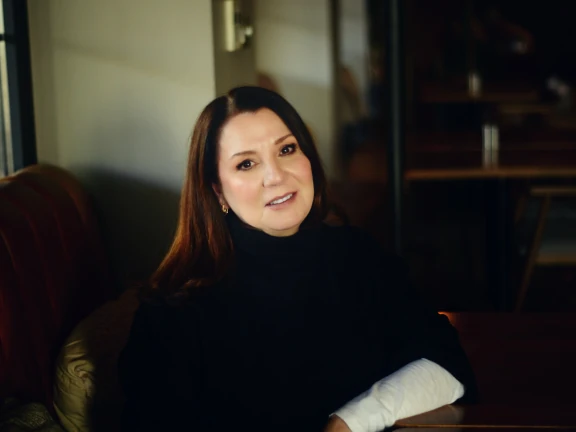
Eventually, we met. She was reluctant to be photographed, and while I was trying to persuade her — before I had even pressed record — she began telling me about her extraordinary adventures. By the time I managed to switch on the recorder, she was describing her first jobs as a young woman, Playboy’s arrival in Turkey, how her work in various corners of the media had brought her into contact with the team launching it, and the offer she received to appear on its cover.
Wait — what were you doing at that point? How did you come to be there?
I was studying sociology at Istanbul University. I left in my third year. I was a student in the immediate aftermath of the 1980 military coup, and the university I had imagined was the opposite of the one I found. None of that counts as an excuse: my father certainly didn’t accept it as one. But I couldn’t find the university spirit I’d been hoping for. It felt like school.
In our day, whatever your financial circumstances, you wanted to work. We all had that ambition: ‘We’ll turn 18, and we’ll get a job.’ At first, I wanted to be a lawyer. My father placed me with a lawyer friend. Süha abi (an affectionate, respectful address for an older man), Mehpare abla (its counterpart for an older woman) — kulakları çınlasın (may their ears be ringing as we speak). I typed up petitions and organised files. My idol was Petrocelli, the lawyer in the television series showing at the time. Then they took me to the courthouse to watch a few hearings, and my dreams collapsed. I realised I couldn’t be a lawyer.
While I was at university, I started working for a company selling language-laboratory courses. Supposedly, people learned languages from cassette tapes. The more you sold, the more you earned, so I tried to sell them to my parents’ friends. Then I had what I thought was a brilliant idea. We knew Cahit Poyraz, an important journalist who had been editor-in-chief of Hafta Sonu and was working at Karacan Publishing. Being a crafty little thing, I thought: there must be at least 200 people at that newspaper. I rang Cahit. ‘There are only 10 of us in the whole editorial department,’ he said, ‘but call Ali Karacan.’
So, brimming with confidence, I did. His secretary would never put me through. ‘We’ll take a message.’ Hang up. One call, three calls, five, nine — impossible. Eventually, I rang the publishing house late one evening and told the man who answered: ‘Son, put Ali on.’ ‘One moment, madam,’ he said. And suddenly there was Ali Karacan.
‘Please don’t hang up,’ I said. ‘I’ve been trying to reach you for days. May I have five minutes?’ He told me to come in at 11 the next morning. I went to sell him a language laboratory. He hired me in advertising instead. Eser Noyan was our manager; there were three of us in the department, including me. I started on minimum wage and, by the end of the first month, my salary had doubled. That’s how hard I worked. I’d entered Bab-ı Âli (Istanbul’s historic newspaper and publishing world). What did I need a sociology degree for?
I was there when Karacan acquired the Turkish rights to Playboy. They said: ‘The women we photograph nude for Playboy are innocent girls. Our image in America is clean — “clean” and “innocent” in quotation marks. University students, girls next door. So you’re important to us.’ I said: ‘Lovely, wonderful, Allah razı olsun (may God reward you for your kindness), but what happens afterwards? What am I going to do here? This isn’t America.’
Good grief!
That was my reaction too. There would be test photographs. I’d spend three and a half months in America, then continue working for Playboy there — doing whatever that meant. I went home all excited and told my father. ‘Dad, they’re offering $5,000.’ He listened without interrupting, completely seriously. ‘Good,’ he said. ‘Tell them to make it $7,000. You and your mother can pose together. It’ll cause quite a stir.’ If he’d simply said no, I’d have been a cover girl already.
What a perfect answer.
What he was trying to tell Aysel was: ‘Whenever I step back from bringing up this girl, she goes completely off the rails. Aysel, darling, if there’s a problem…’
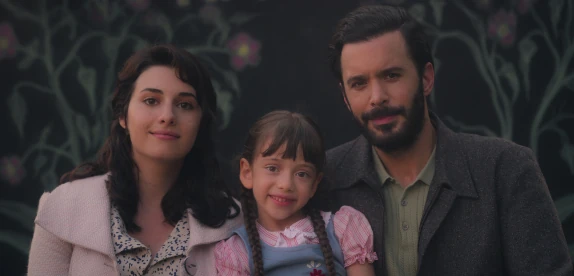
Whenever you say ‘my father’, I picture Barış Arduç.
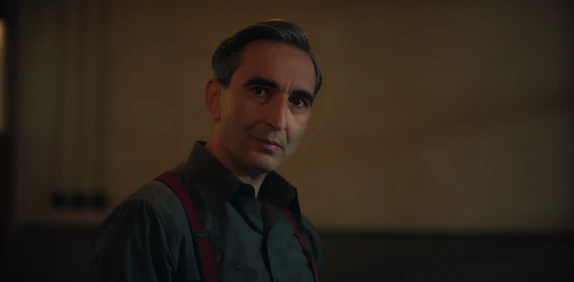
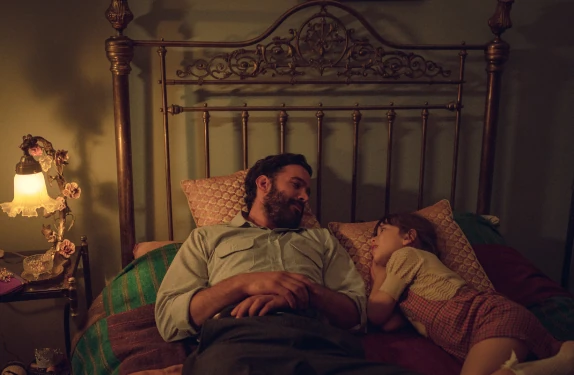
Yes, Barış gave us a beautiful interpretation of İsmet.
Do you miss your father when you see him?
It’s not just İsmet or Aysel. I don’t miss people, situations or objects I can no longer touch. In the first series, I tried not to see the characters as members of my family. As I’ve said in every interview, I was utterly pig-headed about it. I wanted the story to work; the rest didn’t matter. I never said: ‘These are my parents, we mustn’t touch them.’ Zeynep did that more than I did. She’d say: ‘Perhaps İsmet shouldn’t do that,’ or ‘Aysel wouldn’t do this.’ My position was that they were fictional characters, and they would do whatever the story needed.
I watched the episodes over and over. Neither writing nor watching them did I form an emotional attachment. I was pursuing the drama. Then the first trailer came out. A friend messaged, ‘Oh, what’s this?’ and I woke up to it. I immediately opened Netflix. For the first time, I saw that first trailer of Matilda on a big screen. Heja, I started sobbing. The suitcase in her hand, Galata Tower behind her…
‘I reckoned with a lie I’d carried for 45 years’
Matilda and Gökçe have nothing in common physically. Matilda was 1.80 metres tall, with blonde hair and light-coloured eyes. But now, whenever I think of Matilda, I see Gökçe. That was how I got through the first series. The second was stranger. Probably because of Rânâ.
There’s a scene in which she lies to her father. After being beaten, she sits on the doorstep. That scene is real, except I was 14 when it happened, not five, and my grandmother really had died. My mother had a breakdown at home. ‘Because of you, I couldn’t see my mother one last time,’ she said, coming towards me. I got a proper beating. In sheer panic, I ran out of the house, turned the corner and almost collided with my father’s car. ‘What’s going on?’ he asked. In that moment, I said: ‘Mum’s having a breakdown. I was coming to tell you.’
Anyway, I looked at that scene in the treatment for days. It wasn’t that I couldn’t write it; I didn’t want to. I really am hardworking. Especially with screenwriting, I don’t wait for inspiration. If I have to write, I write. It might not work. Nothing might come of it. But I work. Here, the scene was playing in front of me, complete with dialogue, and I couldn’t put it on paper. That was what happened. I reckoned with a lie I’d carried for 45 years. Then it was over, and I sat down and wrote the scene.
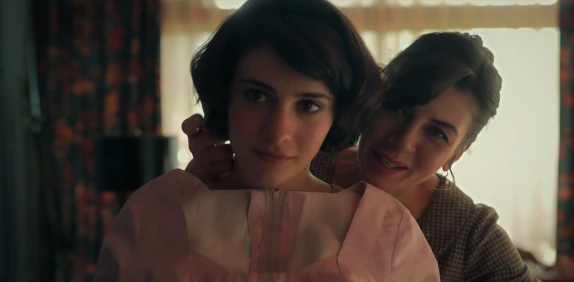
The first time someone called her Rânâ, I could barely stop myself crying.
We were all in floods. I’m lucky, so lucky. People always say that in drama the most important thing is for everyone to be on the same page. It turns out it really is. The writer, the director and the actors must see the same thing when they look at the story and the script. They need a shared language. Putting together a good team isn’t difficult; bringing people who understand each other into the same story is crucial. From the actors to the costume department, that was the journey of The Club.
I’d posted an Instagram story with a photograph of myself as a child. There was a dog in front of me. Gamze Kuş made Rânâ a dress with a dog on the front. It wouldn’t matter to anybody else, but to the team it meant so much. She’d looked at the photographs, picked out that detail and used it. It shows the love with which everyone approached this.
‘In our family, Matilda wasn’t the one who committed the murder’
What does it feel like to be the person at the heart of a story watched around the world, having laid your life bare?
I’m not its main protagonist, of course. When we conceived the project, we wanted to tell the stories of three women, and through their lives show Turkey’s political and economic turning points. So Matilda wasn’t the sole protagonist. Raşel won’t be the sole protagonist, and neither will Rânâ. It’s a story about people.
But you are the person who actually lived it and told it. Do you feel exposed and vulnerable, or more complete?
It’s interesting. Matilda really lived. So did Aysel and İsmet. I’m alive. Ali Şeker and Şükriye lived too. Every other character is fictional, though they carry traces of my memories and of people who passed through Turkey’s collective memory. A great deal of the story is invented. I was born in 1965, for instance, not 1955. We thought it was important to tell the period between 1942 and 1955. Matilda’s life was affected by the Varlık Vergisi (the Wealth Tax that fell heavily on non-Muslim communities).
Now that the fictional Matilda has died, perhaps I can say this: in our family, the person who committed the murder wasn’t Matilda. It was Ishak, the brother who comes from America in the series. We made changes like that to the real story according to what the drama needed. If Ishak had killed someone in the series, he would have become our protagonist. We wanted Matilda to be the protagonist, so we changed it.
When we spoke to advisers from the Jewish community, they asked: ‘Who is this woman? There isn’t a Jewish woman in our community who committed a murder. Who is she?’ We explained. Yet however much you fictionalise things, however insistently you say ‘inspired by real life’, people like to watch and remember it as if everything they’ve seen really happened.
Because it is so convincing — which is an achievement. What about İsmet? Was he really your hero?
Whenever I told these stories over the years — around the table, at a rakı sofrası (the convivial gathering around food and rakı), on the internet, on Ekşi Sözlük or Twitter — I always made a hero of İsmet. He was a different sort of man, a different sort of father. But as I repeated the stories over the years, of course I added qualities and anecdotes. Because he was my hero in real life too, my version always lifted İsmet up while pushing Aysel down. Look at my old tweets: İsmet always wins the match and scores the goal; Aysel loses. When we sat down with Necati Şahin, he said: ‘Your real protagonist is Aysel.’ Kulakları çınlasın (may his ears be ringing as we speak). After that, the way I saw Aysel changed.
‘I inherited İsmet’s madness’
He still gets a little preferential treatment, though…
At the end of the day, we’re all on Team İsmet. I was born in 1965, so the 1970s were my childhood, the 1980s my adolescence. I’ll tell you this because it won’t be in the series. I was 12, at Taksim Primary School. I had a desk-mate called Gülcan, and we were about to leave. We’d been at school together for five years and had decided to go to Beyoğlu Girls’ Vocational School. She would go, and so would I.
We parted for the summer. My mother wanted to send me to Notre Dame de Sion. I insisted on the vocational school. My mother was beside herself, having breakdowns. I enthusiastically explained it to my father: ‘Dad, I’ll learn sewing, childcare, cooking. Gülcan’s going. I’m going there.’ One day he asked: ‘Do you really want to go to this school?’ ‘Yes, Dad.’ ‘All right,’ he said. ‘Sleep on it tonight. If you still want to go tomorrow…’
The next day my mother took me to Notre Dame de Sion. I said I’d never study there. More crises. My father said: ‘She’ll study where she wants to. I asked my child whether she’d thought it through.’ He took my hand and enrolled me at the vocational school.
Term began. No Gülcan. Her father owned Krependen Kadir, in the fish market. Second day: no Gülcan. A week went by: no Gülcan. Then my mother and I went to the market and I asked her father. ‘We sent her to Pertevniyal,’ he said. A sensible family, obviously: they’d send their child to a good school. Meanwhile, I was at the vocational school, chopping leeks in the morning and changing babies’ nappies in the afternoon. I was miserable.
A month later, I said: ‘Dad, take me out of here.’ ‘No,’ he said. ‘I asked whether you’d thought it through. You said you had. You’ll finish there.’ And he made me finish. His parenting methods were highly experimental, but they worked on me.
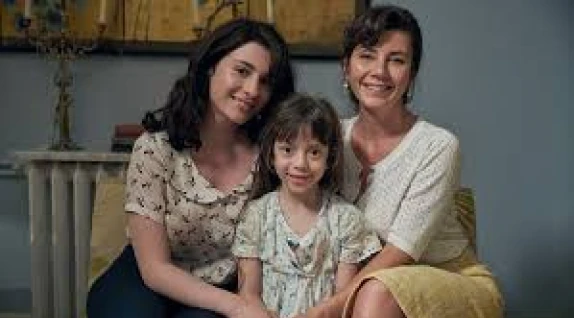
From your interviews, I understand that your mother and grandmother lived with the principle of kayades (keeping quiet, particularly about matters affecting the Jewish community). Yet you have told their story to the world. Have you broken that principle? Was it disrespectful?
Yes, I broke it. Because this is no time for silence. Avlaremoz (let’s talk, let’s tell our stories). I think so much of what happens to people happens because they keep quiet. That’s why I’ve always told stories, always been a talkative child. Some of it comes from İsmet.
When the series came out, people in the Jewish community saw the name ‘Rânâ Denizer’ and said: ‘How can a Muslim tell this story like that?’ Then they contacted me and learned it was my family’s story. ‘It’s so brave — how could you tell it?’ they asked. I said: ‘Perhaps because İsmet’s genes are mixed into mine, I didn’t choose silence.’
It was the right moment. I couldn’t have told it alone. There was a whole table of people who believed in the story, who really believed in the project. And, as you know, it was a very long journey. We started working in 2016. It aired in 2022. We sat around that table for years. It changed repeatedly, went in other directions, became something else. The core family in the story… We were able to tell it because we stood by the story that needed telling. So it wasn’t just my courage.
How did you feel when you visited the set? How much of it was really your childhood?
In the second series, the neighbourhood where Matilda lives is Aynalı Çeşme, where I actually lived between 1974 and 1992. The building where Matilda lives, where Rânâ sits crying on the doorstep, is where I had my first kiss.
Looking at it as Ranini TV’s founder and a television critic, what do you think of the series?
I found things to criticise in both series. I’m not working as a critic now, but I’ve written this many times, and every team knows my view: I’ve never savaged mistakes in work made sincerely. What matters to me is the sincerity of the storytellers gathered around a story. There will be mistakes; we can’t say otherwise. The question is whether they undermine the sincerity of the central narrative.
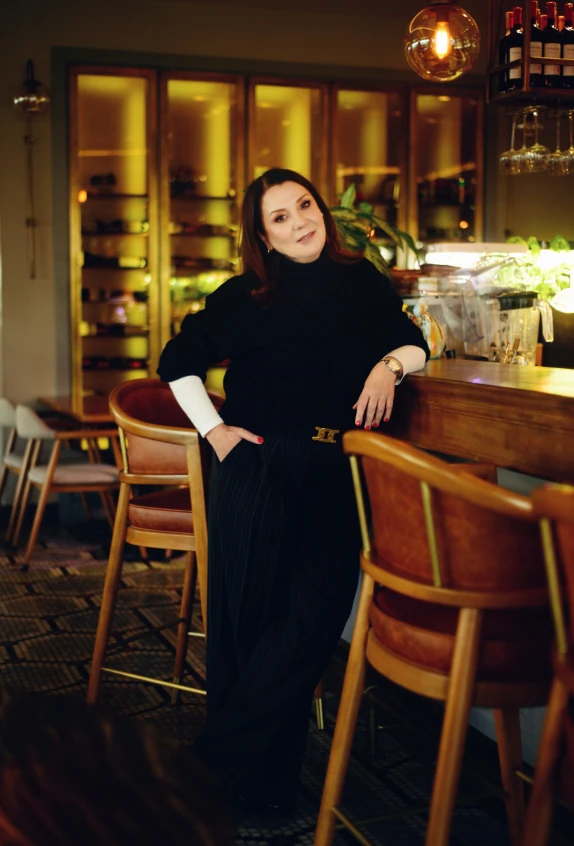
‘My mother would probably have been furious’
Did you dream about your mother, grandmother or father during the process?
Not for a very long time. I don’t dream about them at all. Other people have been doing it for me. Perhaps after the series aired they chose to interact with the audience instead. I’m constantly getting DMs: ‘I dreamed about İsmet last night’, or Aysel, or Matilda…
And if they were alive now…?
I’ve been asked that a lot and never answered, but I’ll answer you. At some point, I think there would have been a huge family row. My mother, especially, would have objected. She would have been angry.
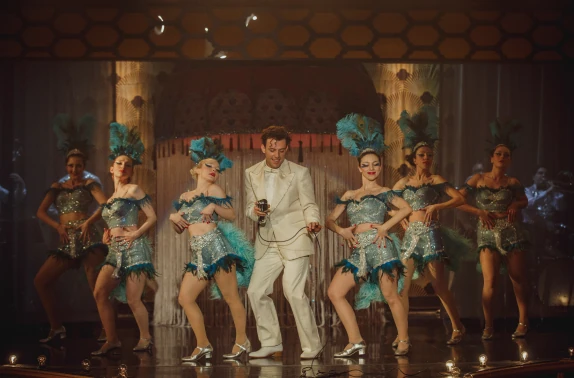
Beyond the Jewish principle of kayades (keeping quiet), there was the backstage world of Maksim, which my mother entered in 1968, when I was three. It came to us through my grandmother, and my father belonged to it too. Its first rule was that whatever happened there stayed there. After my childhood, I was never allowed to witness its incidents or dramas. Unless something truly serious happened at the gazino (a supper club with live musical entertainment), it wasn’t discussed at home.
I didn’t want to tell Maksim’s story, so I invented ‘Club Istanbul’, telling things that hadn’t happened. How could I have explained that to my mother? How would I have explained Keriman, for instance? At least this time she would have had reason to be angry. ‘Do you think you can just walk into the assolist’s (headline singer’s) dressing room? Someone puts something in her drawer — I’d tear them in two. How can you tell it like that?’ I’d probably have had a very hard time.

Tell us, in your own words, how your grandmother came to work at Maksim.
At the time, washing hotel laundry was a common job for women. My grandmother worked in hotels such as the Büyük Londra. One of the women there said a programme was starting at Tepebaşı Gazinosu and they needed someone to do the washing. My grandmother took it on as an extra job.
Then Fahrettin Aslan brought Zeki Müren there. My grandmother was around while he rehearsed. One day, while she was scrubbing laundry, a safety pin left in a waiter’s pocket pierced her thumb. It became gangrenous, and they amputated it. That was in the first series: Matilda washing clothes, her hand bleeding, covered in blood, and going out into the street…
My grandmother left because she could no longer scrub the laundry. Meanwhile, they were looking for a woman to assist Zeki. Women came and went, and he didn’t like any of them. ‘There was a woman here,’ he said, ‘tall, blonde. Bring her to me.’ Abdullah Bey — Allah rahmet eylesin (may God have mercy on him) — said: ‘Zeki Bey, they’ve amputated her thumb. She can’t work.’ Zeki said: ‘I don’t need her thumb. Bring her.’
That was how she moved backstage at Maksim. In 1968, she fell and broke her hip. Then my mother started. That is the real story. Most people wanted me to tell Maksim’s story, but I never want to, and I don’t think I’m qualified. The people who should tell it are still alive. İnşallah (God willing), one day they will.

How did the fictional characters come about?
Every character came out of a need. My grandfather Ali Şeker had nothing to do with the events of 6–7 September. He wasn’t that sort of man. But we needed a character like that, connected to İsmet, so I used my grandfather. It made perfect sense. What can I do? He’s my grandfather; I can say ‘my grandfather’ and move on.
We needed someone like Selim. Why? When we spoke to the first series’ advisers, the most important distinction that emerged was between alaturka (Turkish-style musical entertainment) and alafranga (Western-style entertainment) in Pera. Half of Pera had alafranga clubs; the other half had alaturka gazinolar (Turkish-style supper clubs). The divide was razor-sharp, both in the venues and their customers. The middle classes went to one place, intellectuals to another, French-speakers somewhere else.
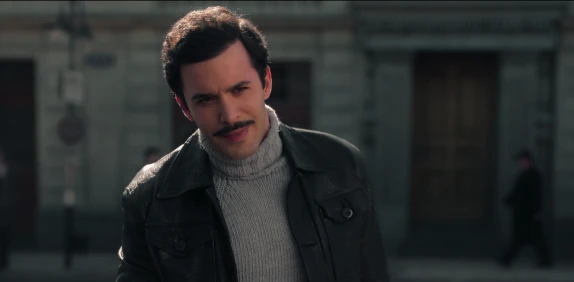
Once we understood that, we decided to create a character who would try to bring those two worlds together, who was himself marginalised and not accepted by his biological family. That became Selim. People loved him. And Salih Bademci gave an exquisite performance.
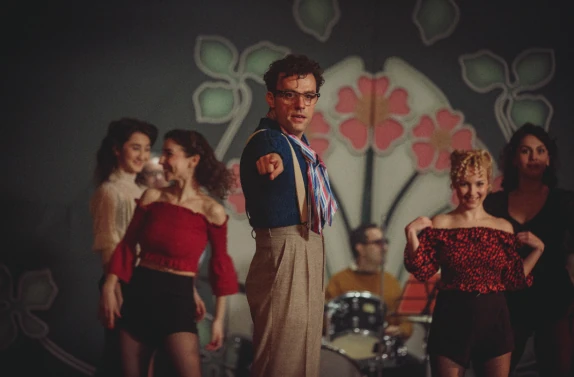
Sezen’s wonderful song played a huge part too. I’ve lost count of how often I’ve listened to it. If you made a spin-off, would it be about Selim?
I’m not sure it would. Selim was much loved, a boy we created with our own hands in the writers’ room. His biological family neither accepted nor approved of him. He was pushed away, knocked about; nobody believed in his dreams. Then he came to the club and found his chosen family. He shone. He rose. He did whatever he wanted.
We cut, and when we return five years later, there is Selim. Simply because he is jealous and his creative ego is bruised, he cuts short another woman’s show — another outsider’s — and calls her a whore. The audience saw none of that. Keriman told them: ‘I washed your socks. Your filthy, shitty underpants. You wanted me to cut off my arm to repay my debt to you, so I pulled your rope.’
Dramaturgically, we made no mistake here. We told everything very clearly. But for the audience it was still: ‘Bad Keriman, she killed Selim.’ Just like real life. When people love someone, they seem programmed not to see the pain, suffering and cruelty that person causes, and to legitimise their wrongdoing.
What makes a genuinely good story for you? Everyone says: ‘If I told you my life, it would make a novel, a film…’ Would it really?
Of course. Any story can be told if you have a context. Take Turkey out of the background of The Club, remove the idea that ‘you can choose your family’, and what remains is an ordinary cliché. As a writer, what I hold on to is what the journey of a story will teach me. Do I want to tell it? Why should I? If you have answers to those questions, any story can be told.
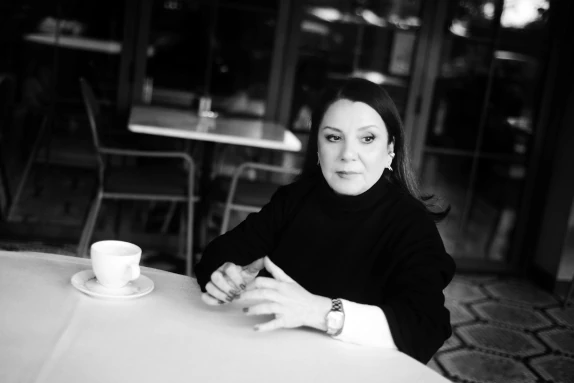
What is essential to a television drama?
When I began writing, Mahinur Ergun told me: ‘This is a collective creative process.’ Unless everyone is on the same page, dreaming the same shared dream, it won’t work — even if Elon Musk funds it, Scorsese directs it and Robert De Niro takes the trouble to turn up and act in it.
What should someone outside the industry do first if they think they have a brilliant story?
Write it. ‘I’ve got a brilliant story, I’ll sit around telling my friends and family.’ No. I’m speaking from experience. If I’d sat down and written instead of telling everyone, it wouldn’t have taken from 2016 to 2022 to reach the screen.
You also have to be very careful not to fall in love with what you’ve written. A story that is good for you may not be good for everyone. I mean putting the story down, not writing a screenplay. They need to work out what they want to tell, gather it within a context and tell it.
Now there’s Letters to the Future, which looks set to be one of the year’s most talked-about dramas. Can you tell us a little? Does it draw on your own life again?
Oh, come on! Am I supposed to write my own life every day now?
With a life like yours, you could keep writing forever…
No, I’m writing other things too. I can’t talk about them yet. It’s too early.
Tell us briefly about Letters to the Future: the story, its structure, when it first came to you.
I was looking for a backstory for a character in a completely different story when I came across an article in Radikal. According to it, PTT, the postal service, was responding to the rapid rise of digital communication with: ‘Right, let’s all write someone a letter.’ It reminded me of the ‘Letters to the 2000s’ campaign when I was at secondary school.
There was a difference between the two campaigns. We had written to ourselves 20 years into the future. My letter never reached me — presumably because my address had changed. I thought: ‘What if that letter had reached me 20 years later?’ And that was where Letters to the Future began.
Apart from the screenplay, did you have requests or input on casting and production? Was having Gökçe Bahadır again your choice, for instance?
We’re making Letters to the Future with O3 Medya, which also produced The Club. Ayşe Durmaz is our producer again. Apart from the director, director of photography and directing team, the creative team is the same: art, post-production and costume.
I’ve said this before for various reasons: I don’t create stories or characters with particular actors in mind. Early in my writing life, before The Club, I did dream of things such as: ‘Wouldn’t Mustafa be brilliant as Ali?’ or ‘If only Mübeccel would come and play Hale.’ Most ended in disappointment. So unless it’s a commissioned project, I don’t picture actors.
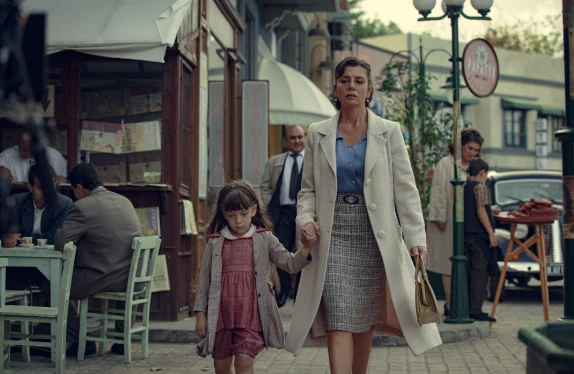
As for Gökçe Bahadır, she is my ‘Matilda’, and I’m very happy she is now playing Zuhal. On the set of Letters to the Future, we joked about it. ‘I played your grandmother; am I playing you now?’ she said, because Zuhal is an influencer. We laughed.
Expectations of you rose considerably after The Club. Does that create pressure?
I worry about one thing: telling the audience the story and characters I have chosen to share as faithfully as I can. I look at every story in the same way and ask the same question: do I want to tell this? Perhaps that’s why I choose stories that have become wounds inside me.
The Club was a sincere story and a journey of the kind our industry gets once every 20 years. Most importantly, it was impartial and very honest. It didn’t try to impose a situation on viewers, make them love or reject it, or show them a beating so they’d settle for a pinch. It inspired many writers to tell their own stories and renewed enthusiasm for period dramas. Even for me, meeting that expectation is difficult.
I understand you also advise the platform Gain. They’re very different platforms, but isn’t it difficult to work for one while making something for another?
No, they’re completely different things. One broadcasts my story if it acquires it; I was advising the other. The team at Gain — Ferhat Bilgin, Abdullah Özgenç and Koray Köse — are people I worked with years ago, who founded and shaped BKM Mutfak. We worked together in the past. They’re all younger than me, and I genuinely think I learned a great deal from them.
In Ranini’s early years, I received lots of offers to consult, but never took them up. Content matters enormously to me. After Koray, Abdullah and Ferhat explained what they wanted to do at Gain, and I realised that their approach to content matched mine, I accepted. I advise them.
Any news from Ranini TV?
It’s still going. It turned 10 this year. I’m planning a change. We’ll see. No spoilers.
Having lived through those periods in Beyoğlu — including its wonderful early-2000s years — how did it feel to be on that set, seeing those old, beautiful things again after what the district has become?
I fled Beyoğlu in 1992 and didn’t return until I went bankrupt. The Beyoğlu I remember was already falling apart; its colours had long since changed. I remember a Beyoğlu that had lost many of its colours by the 1980s. It had already become a place we were frightened to walk around.
I spent my childhood in the heart of Taksim, backstage. Yes, for me it was a colourful fairground. But no child lives at the fairground. In the evening, they go home to their neighbourhood. We did too. So I don’t remember some glorious Beyoğlu. And I don’t have a wistful attachment to nostalgia. Let’s go to İstiklal Avenue together now and stop a 20-year-old. ‘How’s Beyoğlu?’ we’ll ask. They might say: ‘Wonderful.’ I don’t like clinging to the past.
Yes, there is no symbolic place left on İstiklal Avenue that I can point to as part of my childhood. But who cares? Now we send each other location pins and go wherever we’re going without looking up from our phones anyway.
But there is a city’s memory, surviving only in television dramas…
I wish we could have protected that memory. But burning and destroying things is a very old illness in these parts, and we’ve left the treatment far too late.
Do you look at love in the same way?
What is love? Now we’re getting into things I could never explain. I have some very troubled ideas about love and family. I’ve never been in a relationship in which I didn’t feel love, respect, affection and passion. But somehow I always lived with a safety mechanism.
As he says: ‘I’m giving you the key to your heart. Throw it into the sea if you like. Lock it and throw it away, or open it.’ I’ve always taken that advice to heart. The key İsmet gives Rânâ has always been in my pocket.
After everything you’ve lived through, how did you become so strong?
My mother and grandmother were wonderful people: conscientious, loving people, always wanting to help. But the main reason I’ve made it this far in one piece must be İsmet. If I’d grown up with just Matilda and Aysel, I’d have become a drama queen attached to their instinct for sacrifice, for giving themselves up for someone else.
‘El âlem ne der? (What will other people say?)’ was the headline in our house. My father always said: ‘Listen to what your heart says. Everybody else is a detail.’
I had a wild youth. I crashed into things, hurtled about, stumbled and got up again, but I always lived with that feeling. I never knowingly hurt anybody. I never deliberately wronged anyone. I lived through all the recklessness and thoughtlessness of youth — perhaps, in quotation marks, the things those traumas brought with them. And now that I’ve reached this point, I can see something very clearly. As Matilda says, forgetting is both our greatest gift and our nightmare.
There is one thing you cannot do: forget your own journey. Even when you pretend to have forgotten, you know you haven’t. You have to find a way to make peace with yourself. Because you are alone when you lay your head on the pillow at night, and everything you did that day runs through your mind. If not now, tomorrow. Today you’re busy and don’t remember. Tomorrow you’ll be older. When you slow down, the past will come back.
So here’s some advance notice, friends: if you want to grow old peacefully, fall asleep peacefully and live without nightmares, you have to discipline the cruelty within you, keep your conscience clear and let some air into your heart so it doesn’t rust.



Paylaş


