


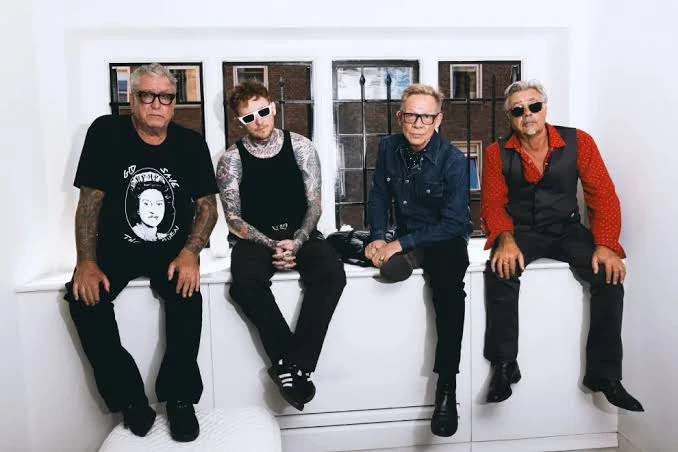

You expect passion — and perhaps a few choice insults aimed at the present — from the guitarist of a band that became an idol for young people in Britain’s most anarchic days, swore on live national television and told the world the Queen wasn’t human. But this is Steve Jones: the guitarist of the world’s greatest punk band, a man who battled addiction for 35 years, now clean, 70, and a senior figure who has, as we say, ununu elemiş, eleğini asmış (sifted his flour and hung up his sieve: done his life’s work and stepped back).
On Zoom, he asks: ‘Where can I get good lamb in Istanbul?’ Ignoring the name I type into the chat, he wants me to write the restaurant on paper and hold it up. I bring ‘ÇİYA RESTAURANT’, in large letters, closer to the camera. ‘Stay there,’ he says, and takes a screenshot.
‘I’ve never been to Istanbul. Never been to Turkey. What’s the time difference? I’m not that interested in the city. Tell me about the food.’ Gladly. But what happened to punk? Weren’t we going to get the world on its feet through music again? What about Anarchy in the UK, Pretty Vacant, God Save the Queen?
His answer might as well be the title of the album: Never Mind the Bollocks, Here’s the Sex Pistols. Anyway, isn’t turning my questions inside out and refusing to answer them its own kind of anarchy? When I persist, he says: ‘Look, I’m 70. I’ve done what I had to do. It’s the young people’s turn now. Let them deal with politics, with the world.’ If that isn’t punk, if that isn’t the Sex Pistols, what is?

Hoping for more, I tell him I’m saddened that the punk spirit I breathed in and adored on Britain’s streets as a child now seems covered over by consumption and capitalism. As one of its founding figures, does he still feel it somewhere in the streets?
‘I think there’s still a strong rebellion against the system. It might just not appear as punk rock now. It comes from different generations, from different places.’ There is hope — and an opening for my next question. ‘When you began playing together, Frank said the world, in its current state, needed this music more than ever. Do you agree?’
This time he is firm. ‘No. I think whoever’s young, if they’ve got a grievance, they’re the ones who should stand up. If they’ve got something to say, say it through music or whatever works for them. We did our part at the time. I just want to have a good time now. To be honest, I’m not that interested in politics. It’s really not my thing.’
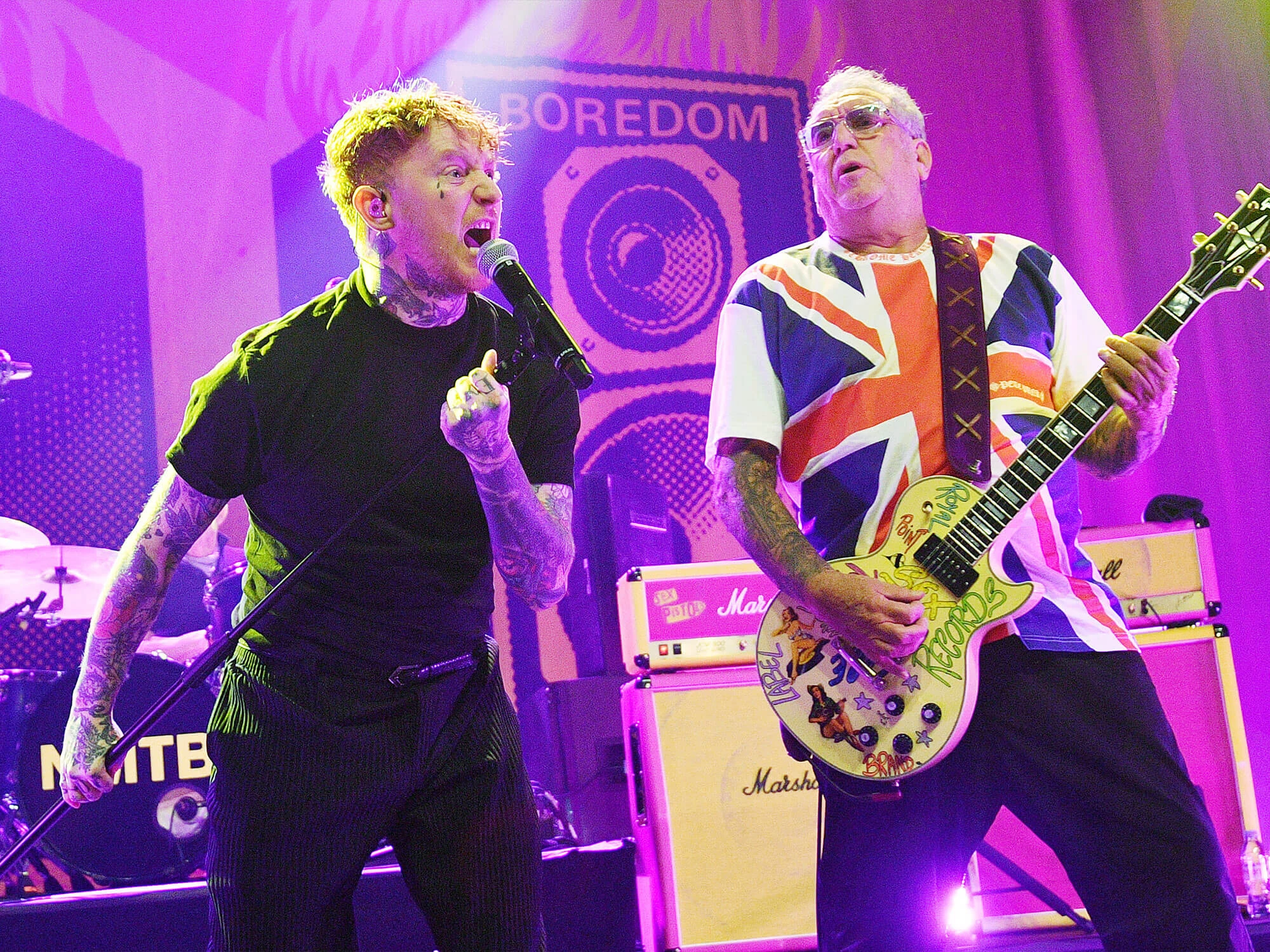
He continues: ‘I’m 70 now, after all. I’m not going to do what I did at 19. At the moment, I really enjoy getting on stage with Frank Carter, Paul Cook and Glen Matlock and playing these songs. We have a really good time together. Frank’s great too. He’s much younger and brings all that energy to the stage. Basically, we’re having fun.’
So I ask what Frank has added besides youthful energy. To be honest, ‘Sex Pistols featuring Frank Carter’ currently feels to me like a tribute project, however brilliant Carter is on stage. ‘It’s not about Frank’s age. Since he joined us, we’re all back on stage at this age, enjoying ourselves. That’s the point.’
I continue as though I haven’t been put firmly in my place. ‘All right, I’ll stop talking about the 1990s and politics, but I have one last question, because we’re facing similar problems now. When Thatcher died — one of the politicians whose era helped provoke punk’s rebellion — or when Queen Elizabeth died, whom you even wrote a song about, what did you feel? Relief?’
‘Everyone dies eventually. Is anybody immortal? Being human means being mortal. They were just people too. Someone gave them a title, that’s all. I don’t like it, but that’s how the world works. Queen Elizabeth died, but the monarchy continues here and in other countries. Now it’s a tourist attraction. The question is whose pocket the money from that tourism goes into.’
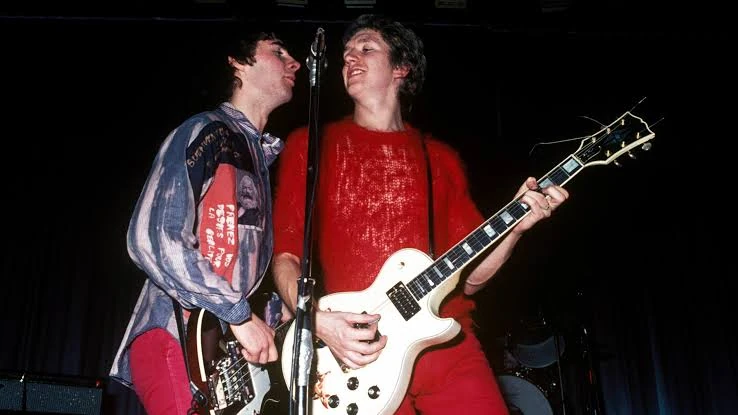
I steer towards music, and perhaps subjects he might want to discuss. Here is the man behind the riffs of songs that made a band with one album into a legend, yet the band is often remembered for its tabloid stories. ‘Sometimes the stories about the group overtook the music,’ I say. ‘Does that bother you?’
Now he becomes serious. For the first time, he begins to tell the story, and I hear rock history from Steve himself.
‘We really only made one album. There were a few other recordings, a few more songs, but essentially one album. Then there’s all that drama: Sid dying of an overdose, Nancy being murdered by somebody. Nobody actually knows who killed Nancy. Everyone has a guess, a theory, but nobody really knows. We don’t either. We weren’t there.
‘One album, swearing on television, and God Save the Queen. The song was actually number one, but they didn’t put it at number one. And you can’t forget the fashion that grew alongside us. Vivienne Westwood made a huge contribution, and so did Malcolm McLaren. There wasn’t one reason punk rose and all those things happened. Many things came together at once.
‘Think of when rock’n’roll first appeared. In the 1950s you had Elvis, Little Richard, Chuck Berry and the others. All solo artists. There weren’t bands in the sense we think of them today.
‘Then music evolved, and the Beatles and the Stones arrived. That was when bands began coming to the fore and writing their own music. Many more followed, but the Beatles and the Rolling Stones were at the front of that change.
‘By the 1970s, with Led Zeppelin, Deep Purple and many other big rock bands, the music became harder and heavier. Then came glam rock.
‘That was when I really connected with music. I was about 14 when glam appeared. David Bowie and the Spiders from Mars, Roxy Music, Queen — those were the bands that excited me and really made me interested. There were plenty of others, but those were my favourites.
‘The next step was punk.
‘Some say it began in 1975, some in 1976. Once again, a new and different generation appeared. It was revolutionary; it changed music and culture again. But to me it’s all a continuation of rock’n’roll. It takes different forms in different periods, that’s all. And it’s continuing in another form now.’
‘So what do you think of rock today?’ I try one last time with the rocker who told his life story in Lonely Boy.
‘I like Idles. They’re pretty good. I really like Arctic Monkeys too, one of my favourite bands. I think Alex Turner is a very good songwriter. I really do. I just wish he’d make more albums. He waits so long to release a new one. I like Cigarettes After Sex too. I love that music. It’s very easy to listen to, but it stays in your head.
‘So I still listen to some bands. When I was DJing, I listened to far more because I wanted to discover new music and let people hear it. I don’t do that as much now. Mostly I listen on Apple Music. I make lots of playlists there. I love quieter music and instrumental stuff too. But sometimes I still turn it right up and rock out. And we still rock on stage, don’t get me wrong. If you come to see the Sex Pistols, you won’t find a band to underestimate. We still shake the stage pretty well!’
Before returning to his questions about Istanbul and ending our conversation, he says: ‘Look, when you’re a teenager, you’re angry and you don’t care about anything. Or at least you should be. That’s partly what you’re supposed to do. You don’t know what life is; you do stupid things. That’s what’s expected of you. As you get older, you learn. You learn, you learn… That’s the point. That’s life. I’m not going to spit at people from the stage at 70.’
I can’t help interrupting. Thinking of people past 70 who refuse to leave office, or run countries while falling asleep in meetings, I say: ‘But there are plenty of very angry 70-year-olds out there.’
‘Yes, of course there are lots of angry people. But that isn’t my story. Mine’s different. I’ve had a lucky life. I’ve been clean for 35 years: no alcohol, no drugs. I completely changed my life, and now I’m happy. I’m also very happy I can still do what I’m doing with the Sex Pistols and Frank Carter. It’s really great.’
At last, I understand. The past may be part of your story, but what matters is who you are today, what you do and how you feel. I thank him for today’s lesson, and for keeping my anger company throughout my apparently endless adolescence. Long live rock’n’roll. We’re still pretty vacant.
Paylaş


