


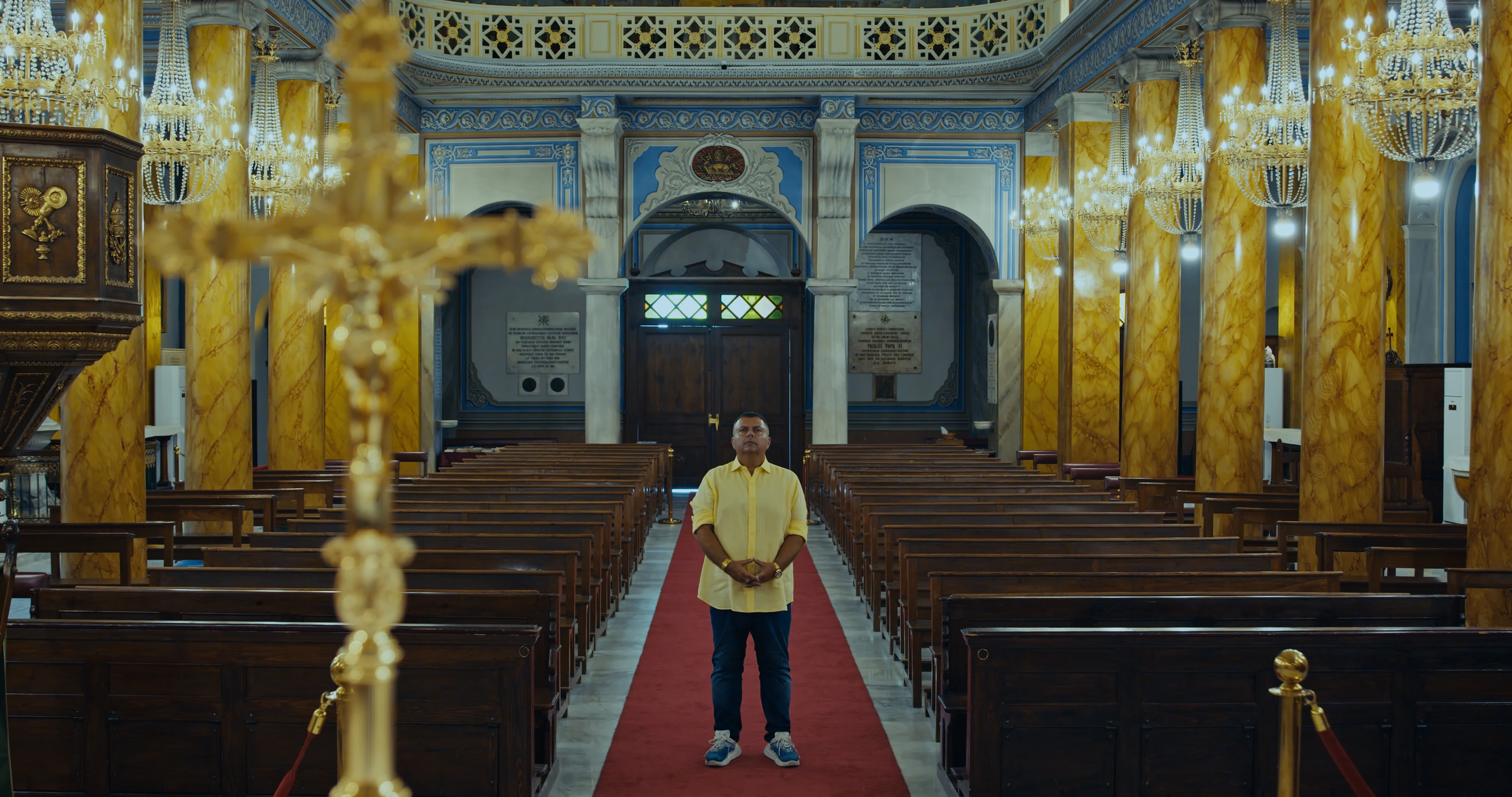

What do you think about death? Your own death, specifically. At some point, you start wondering where you’ll be buried. In our culture, there is even kefen parası (money set aside for one’s shroud and funeral), saved by older people so they would not burden those left behind. Some of us might imagine our own funeral and cry, like Amélie. But there is one person among us who has gone further: beyond the imagining, beyond the grave itself, commissioning a magnificent mausoleum, selecting special marble, working with an architect and having artworks made for it.
That person is Istanbul businessman Orlando Carlo Calumeno. He commissioned architect Evren Öztürk to design a monumental tomb in the city’s Feriköy Latin Catholic Cemetery, and painter Memduh Kuzay to paint the lid of his coffin. What initially seems an eccentric story opens out into our distance from death, Anatolia’s vanishing multicultural memory and the old days of Büyükada.
Calumeno is a Levantine, Italian on his father’s side and Armenian on his mother’s. He has an extraordinary collection of Ottoman panoramas, a publishing house and a gallery. He is also a financial analyst and chief financial officer.
Cihan Güngören and Mustafa Seven made a documentary about the process, Calumeno and his family. Already collecting festival awards, Thank You God for My Spoiler looks likely to win many more. It has even won best documentary at the Amsterdam Film Festival.
I met Güngören and Seven online — Seven was on the road, naturally — to talk about the film, death, Orlando and Anatolia. And there is good news: the pair are preparing another documentary.
How did you meet Orlando?
Mustafa Seven: Our friendship began through work. Orlando was a manager at the company he worked for then, and we made films for it. We became friends afterwards. He has a gallery and publishing house, Bir Zamanlar Galeri and Bir Zamanlar Yayıncılık. Because he is such a multifaceted person, we spent time together socially as well as professionally.
One day, when we visited, he said: ‘I’m starting something very strange.’ We were used to his eccentricities, but weren’t expecting this. He said he would commission a mausoleum for himself. At first, we didn’t understand. He had already worked it all out in his head and spoken to an architect.
Initially, we thought we would document it. After all, there hadn’t been a monumental tomb built in Istanbul for 150–160 years. We wanted to record it. We visited while the plot was still empty, saw the site and the project, and realised it would lead somewhere extraordinary. That was when we decided to make a professional documentary. Cihan, sağ olsun (thanks to him), prepared the outline.
Cihan Güngören: As Mustafa hocam (a respectful address for a teacher or senior colleague) said, Orlando has a gallery concerned with Anatolian minority rights, where we were working as creative directors. This project developed in much the same way. We prepared the documentary proposal, chose a title and went to explain it to him.

The title is wonderful, by the way.
Güngören: Thank you. As we explain in the documentary, we discussed where it came from and its counterpart in Islam. There is a saying attributed to the Prophet Muhammad: ‘Die before you die.’ That is, in a sense, what he is doing. He knows and understands the ending waiting for us all. The difference is that he is not frightened of death; he prepares for it. That was how everything began.
You are cousins, and have grown up and worked together for almost 45 years. You must have met fascinating people. Have you ever met anyone as interesting as Orlando?
Seven: Honestly, I haven’t.
Güngören: There is a man in Adana who owns Ölüler Kıraathanesi, the ‘Coffeehouse of the Dead’. A kıraathane (a traditional coffeehouse and social meeting place), run by someone fascinated by death. About 700 photographs hang on the walls, showing people who used to come there but have died.
‘Mind you,’ he says, ‘my photograph is there too. Aren’t we all going to die one day? I had mine framed so it could be there as well.’ He is interesting, but not as interesting as Orlando.
Did making the film change how you see death?
Güngören: I think the spoiler is very clear. We have to accept it and live with it, but of course we can’t quite manage that. Perhaps we aren’t brave enough. Still, there is no point avoiding the conversation and living in fear. Through the documentary, we expressed some of what was inside us too.
I actually think much as Orlando does. I haven’t prepared as much as he has, but I don’t think being frightened of death makes sense.
Seven: As we say in the film, it is something we avoid, yet it is always in the middle of our lives. It feels very far away, but it isn’t.
How did Levent Erden become involved?
Seven: Levent was already Orlando’s friend. We needed someone to explain the intellectual side and add depth. We considered other people, but Levent was the best person for it, and he really did bring that depth.
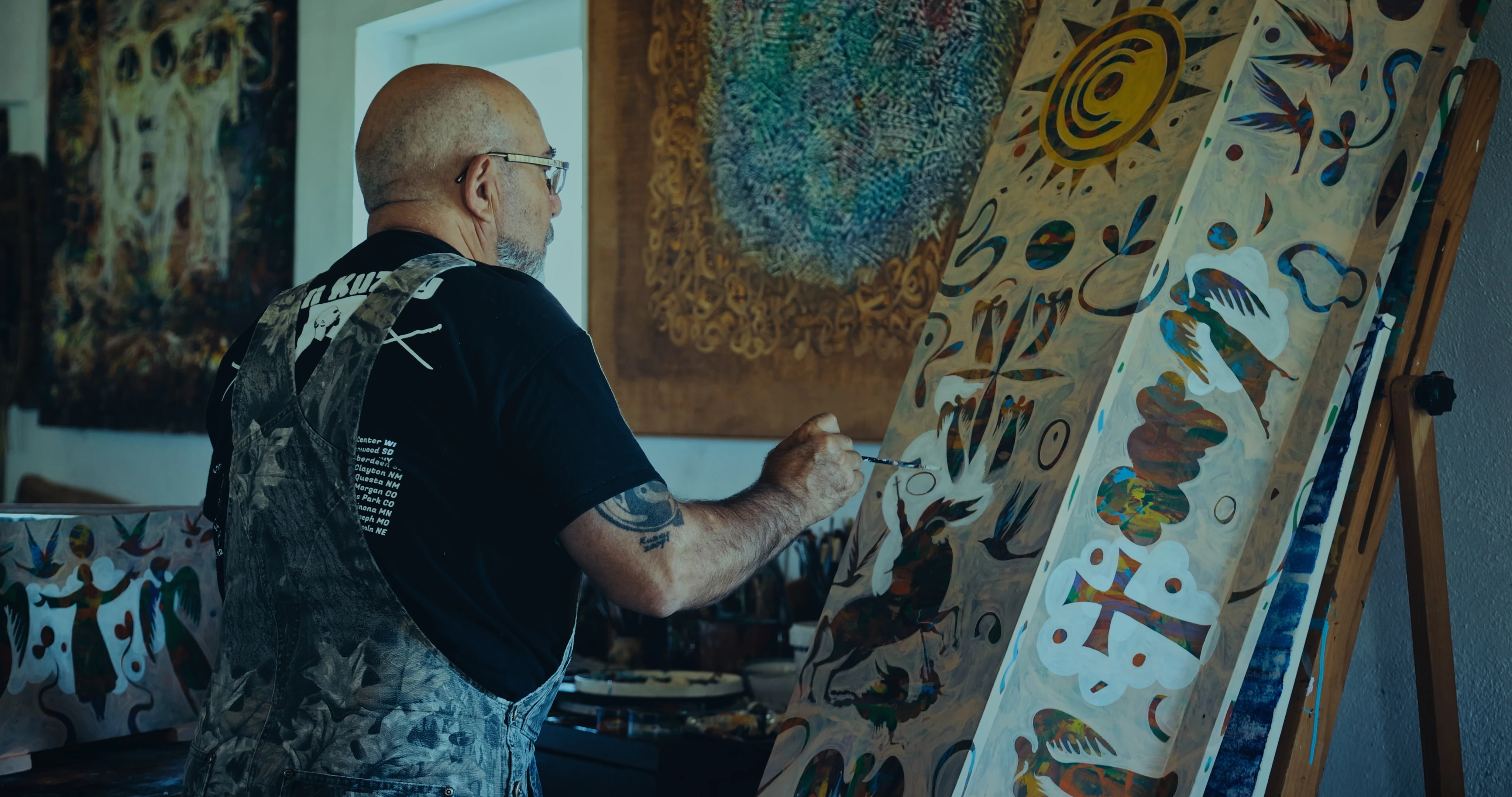
In the first few minutes, you wonder: ‘Is this man mad?’ But as the film continues, we confront death. Then we see how much he loves what he does, how much he enjoys life and loves this country, how rich Anatolia is and how we have forgotten that. How did you find the balance when portraying such a multifaceted person and project? The film could have been interpreted in very different ways.
Seven: That was where Cihan’s intelligence came in.
Güngören: We introduced different elements to find that balance. For example, in Anatolia there is baba-oğul helalleşmesi (a father and son asking each other’s forgiveness and blessing), sometimes before the son leaves for military service. I asked: ‘Do you have that too?’ He said: ‘Not among Catholics as such, but among Anatolian minorities, yes.’ We have influenced one another for centuries. Throughout history, minorities have been influenced by Turks, Alevis and Kurds, and those communities by minorities. Everyone by everyone.
So we thought: let’s write a father-and-son sequence. But this is a documentary; you can’t simply construct it. The scene is a single shot, with the camera at a distance. Orlando and his father talk. We had told Orlando beforehand: go to the cemetery with your father, talk about death, have a conversation. What emerged was a beautiful, very emotional sequence.
Scenes like that showed other sides of the successful, wealthy businessman and kept it from becoming a story about ego. The mother-and-son conflict and the father-and-daughter conversation worked in the same way. We could say: Orlando is a person like us. Yes, he is rich, very rich. Yes, he has an ego and qualities unlike ours. But he is human too. After all, he is a CFO managing a great deal of work and many companies.
The Leyla Gencer scene works like that too.
Güngören: Yes. We asked Orlando to read about Gencer’s life, to see whether he might find something in common. She, too, had planned what should happen after her death while she was still alive.
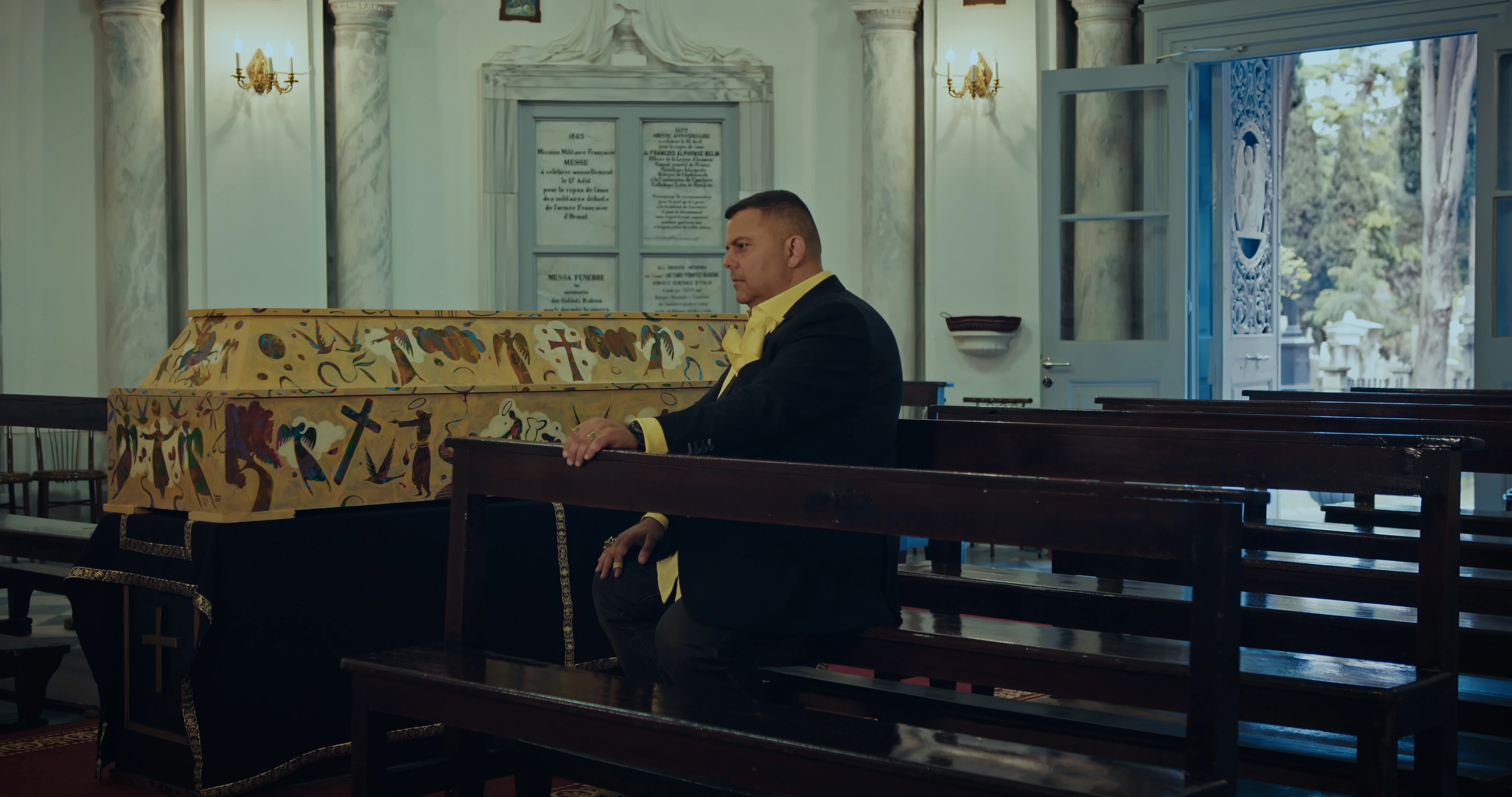
In the second half, we go to Büyükada, Orlando’s childhood and Istanbul’s many-voiced, colourful days. What was it like to hear about the island and that time from someone who had lived such a childhood?
Güngören: We wanted to show his childhood and explain that his familiarity with cemeteries began then. ‘Greeks, Armenians, Syriac Christians, Alevis, Turks and Kurds — we all lived together here, and we were very happy,’ he says. He doesn’t say whether he is unhappy now; he leaves that to the viewer. But he says: ‘We were happy then because my friends and I played football together in the street, in the cemetery, in the church garden.’
‘We lived happily together. That’s how we used to be.’ We wanted to convey that too. Speaking for myself, I’m not that happy now.
Seven: In the film, Orlando says: ‘We managed the difficult feat of breaking apart the Anadolu mozaiği (Anatolia’s cultural mosaic).’ That was exactly what we felt and wanted to say. Büyükada is an iconic place in the memory of minority communities. We all have these social concerns. We cannot detach ourselves from them; we had to exist with them in whatever we made.
You travel all over Anatolia, Mustafa. Are there places where that mosaic’s richness still exists and makes itself felt?
Seven: Unfortunately, we can only see its traces. Yes, I travel a great deal; I’m on the road now. Recently, for instance, we visited Artvin and went to an Armenian village. Only the stones and a church remain, and the church is a ruin.
As Levent says in our film: ‘We call them minorities, but were they minorities? They accounted for almost 50% of the population.’ Now only traces remain. And that is why we are where we are — politically, economically and sociologically. I think the struggle to erase their very existence brought us here. It is the result of those policies.

In the film, Orlando recalls being asked in the army: ‘Aren’t you Turkish? What kind of name is that?’ It was deeply triggering for me. I have heard that question countless times from police, at airports and in traffic, and nothing felt more insulting than ‘What kind of name is that?’ We could talk about that for a long time. But back to the film: Orlando’s mother refuses to accept the mausoleum. Did she eventually make peace with it?
Seven: No. Once it was finished, she told us: ‘Mention another film to me and I’ll kill you, and beat up Orlando too.’
Güngören: In a way, we made her mourn someone who hadn’t died. It created an atmosphere of mourning. She even asked: ‘Is my son going to die?’ Mourning a living person affected us too; it was strange. She had a natural maternal response. She doesn’t like us. We apologise to her. Eventually, she watched and liked the film, but she still doesn’t like us. That will remain.
How can people who are curious about the documentary watch it now?
Güngören: We aren’t preparing a platform release at the moment. We’re submitting it to festivals. We’ll see once that process is over.
Seven: Let the festival excitement finish, then of course people will see it. At worst, if nothing else happens, we’ll send a link to anyone who asks, or put it on YouTube.
Paylaş


